Project 54
Organ Historical Society
Villanova, Pennsylvania
2026
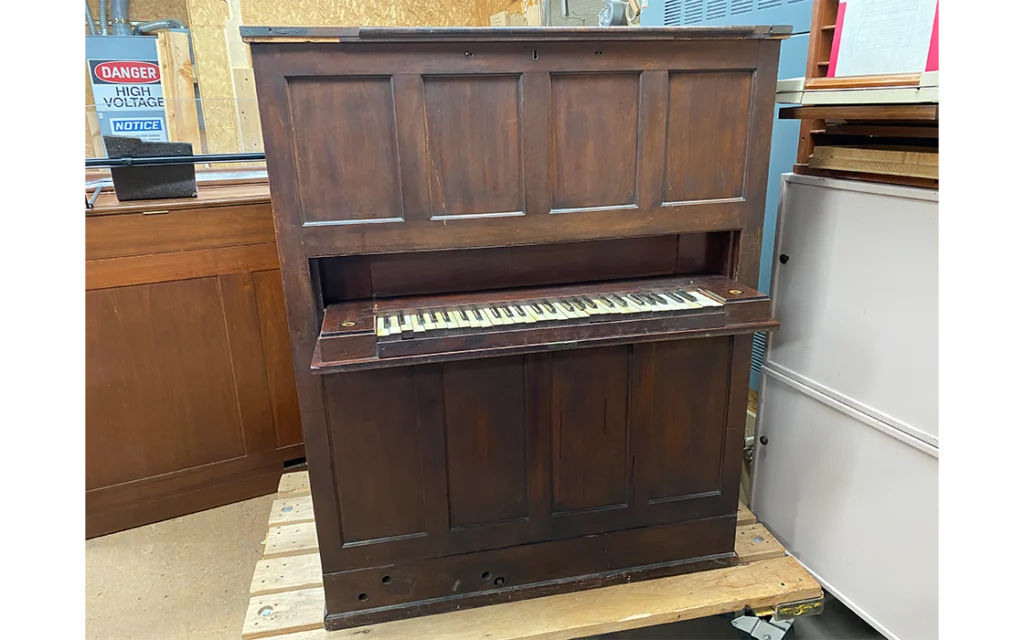
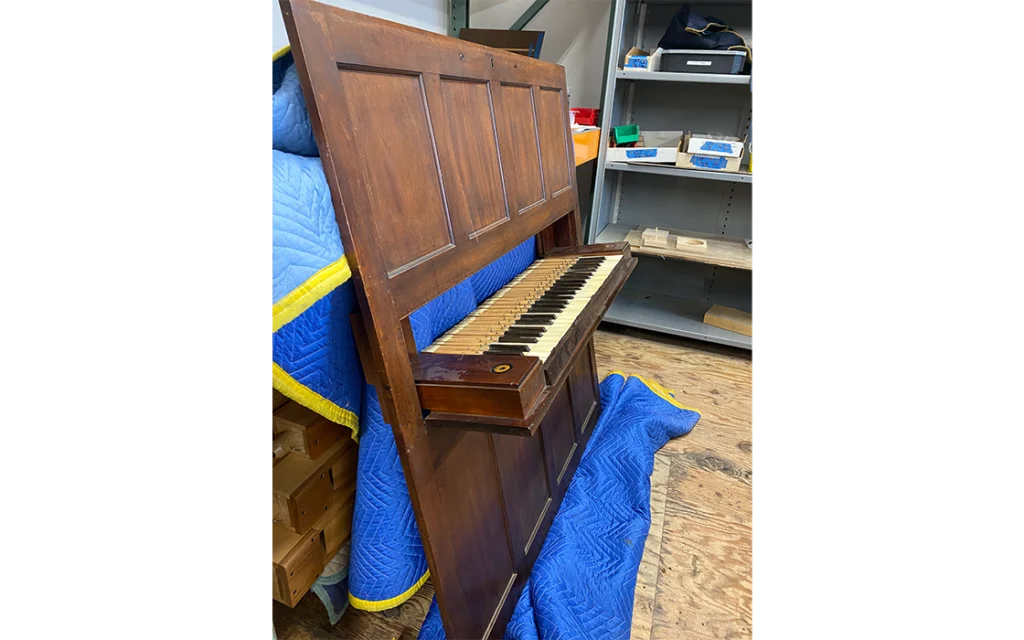
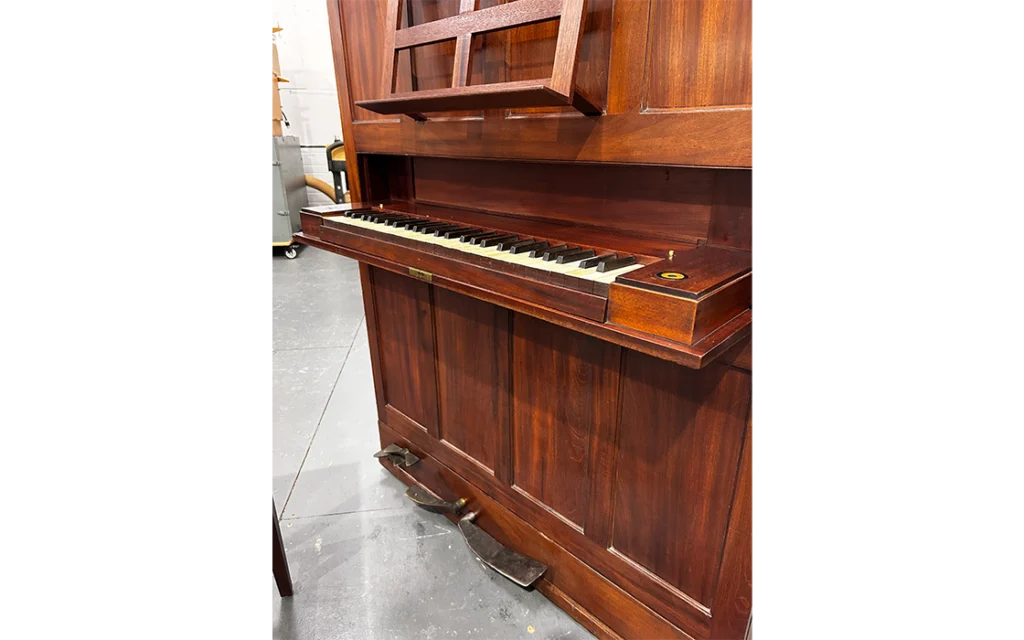
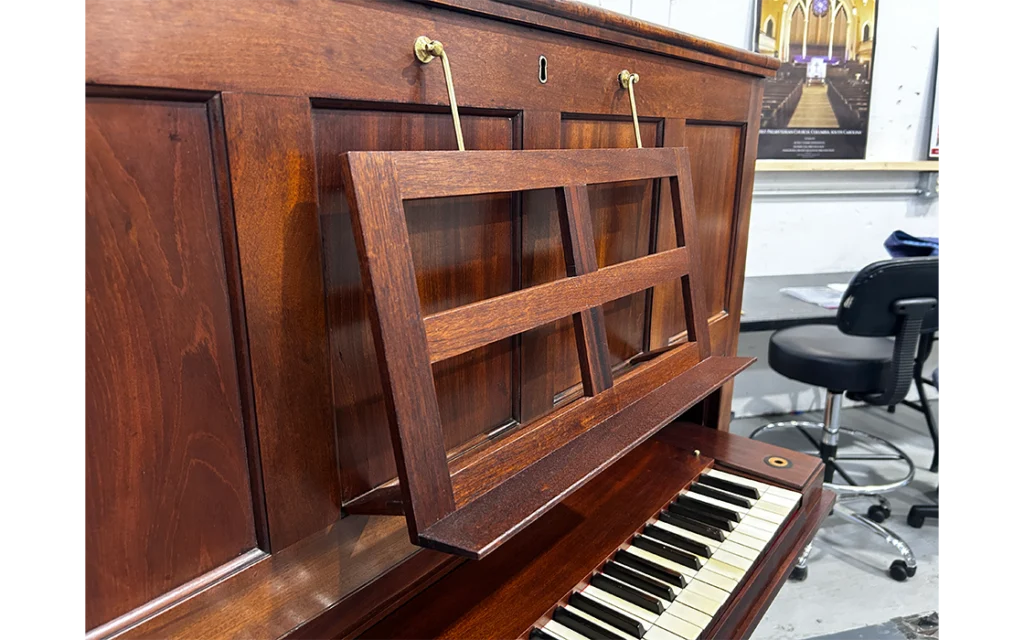
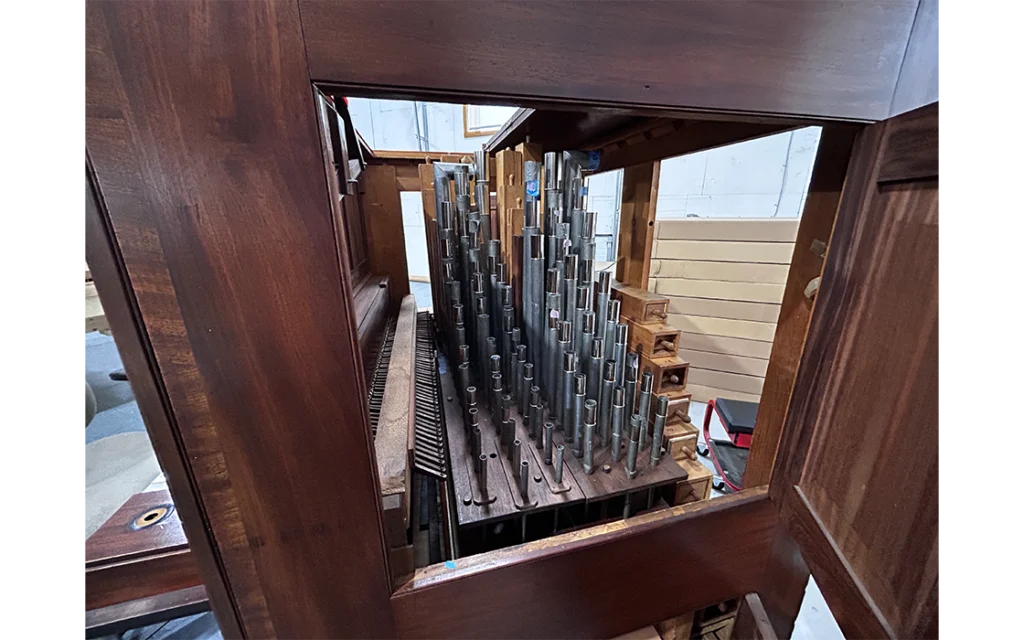
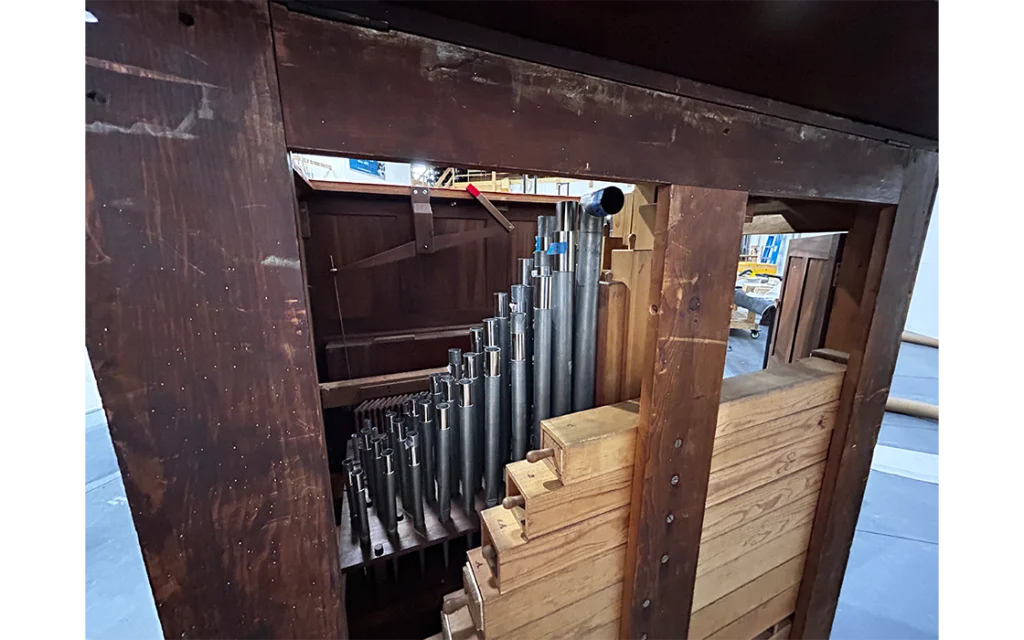
circa 1815-1824 Jacob Hilbus cabinet organ
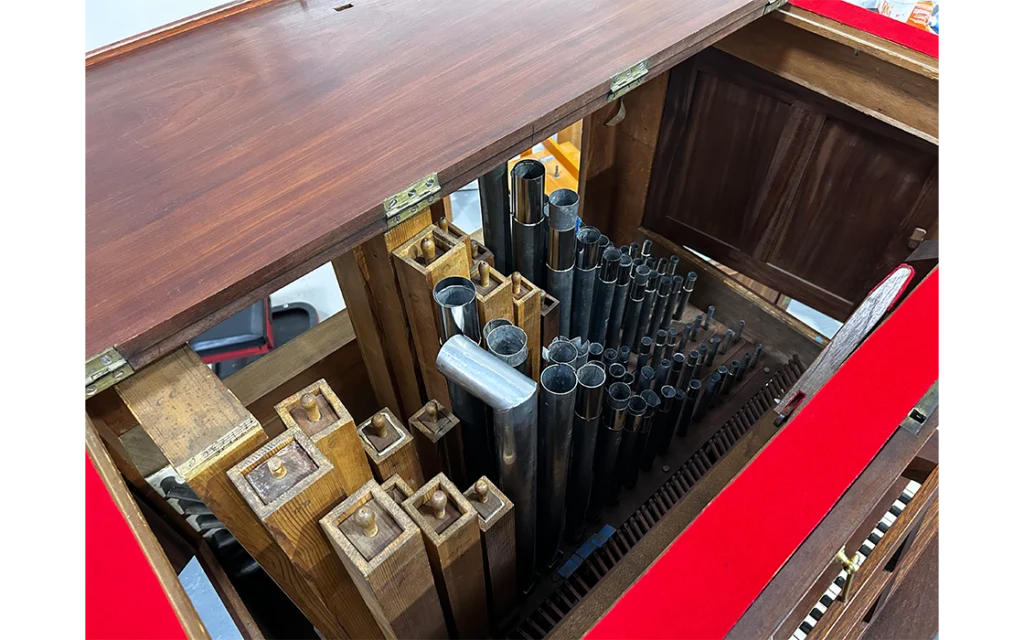
2 Ranks / 1 Manual
Mechanical Action
Historic Restoration & Research Project
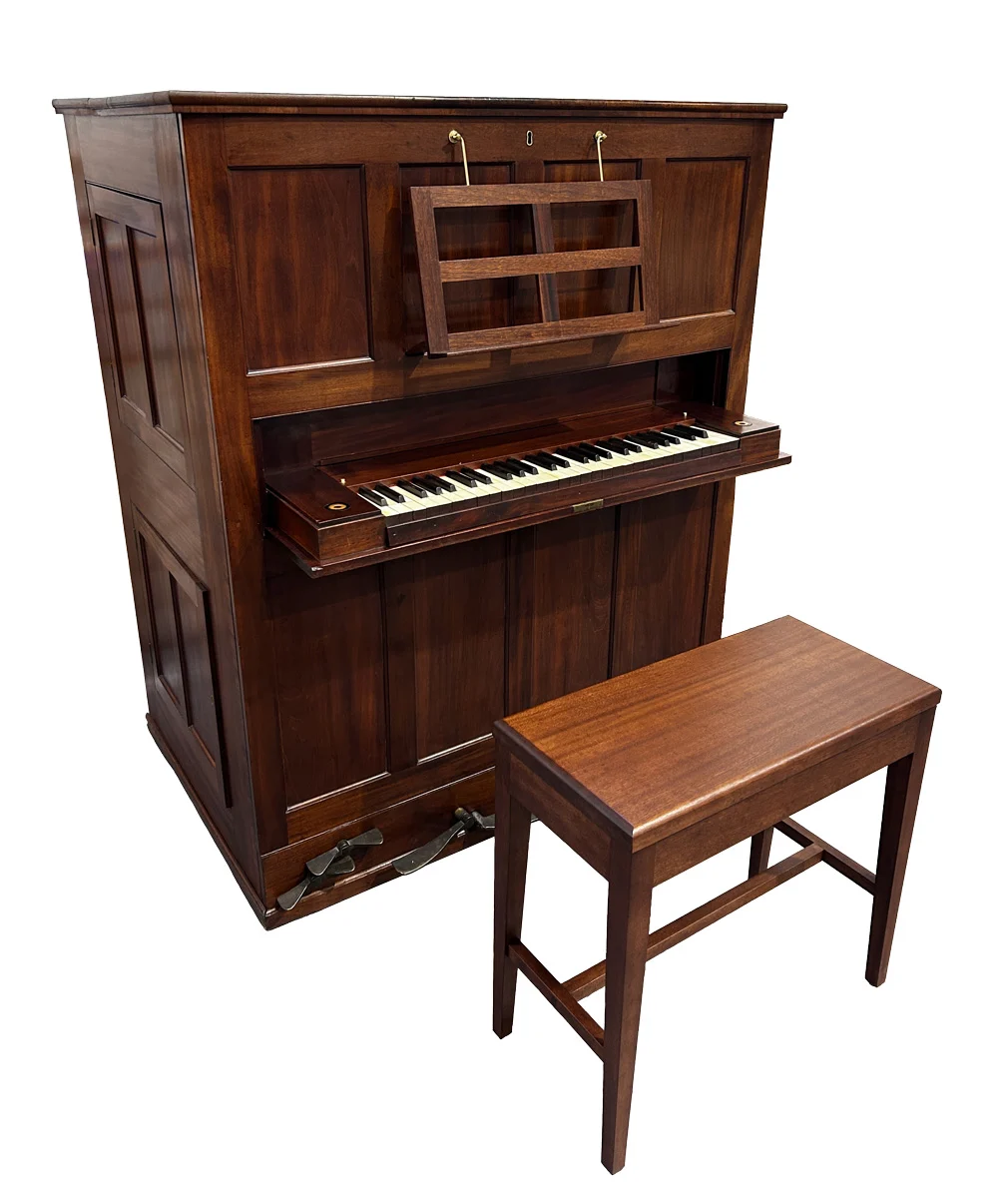
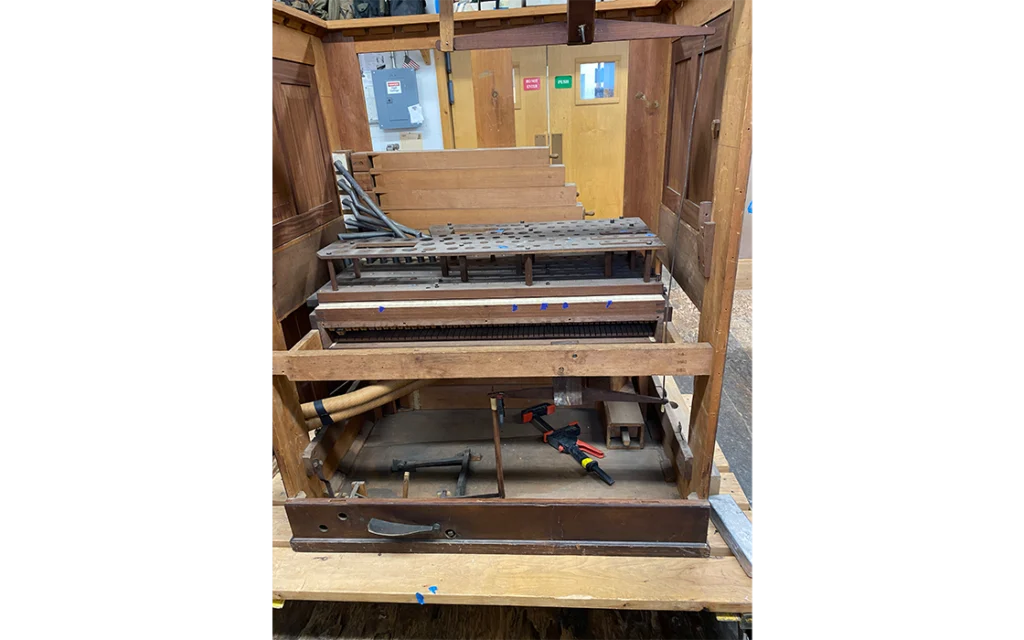
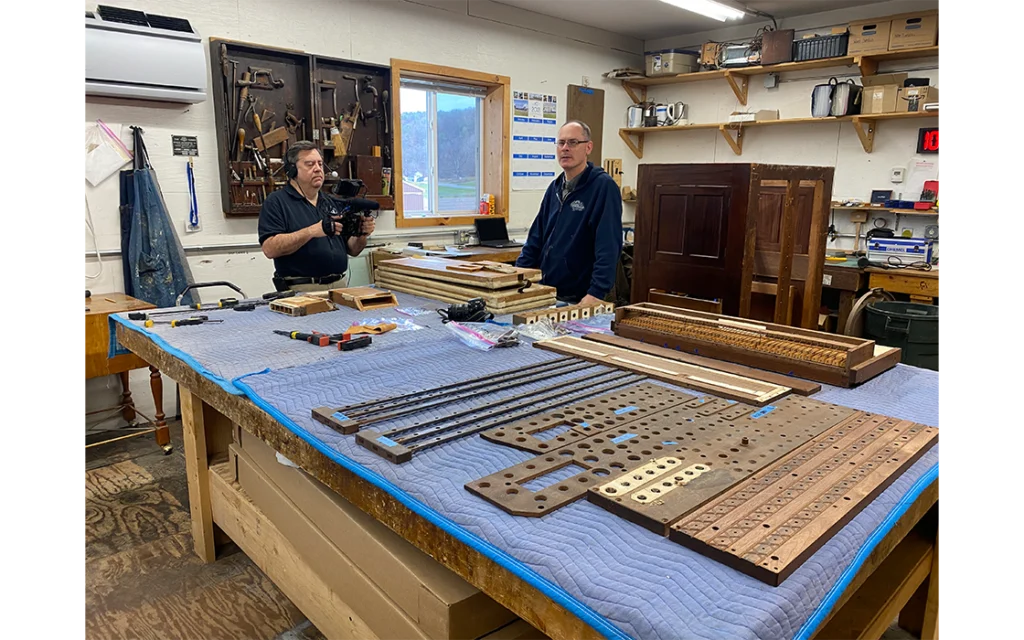
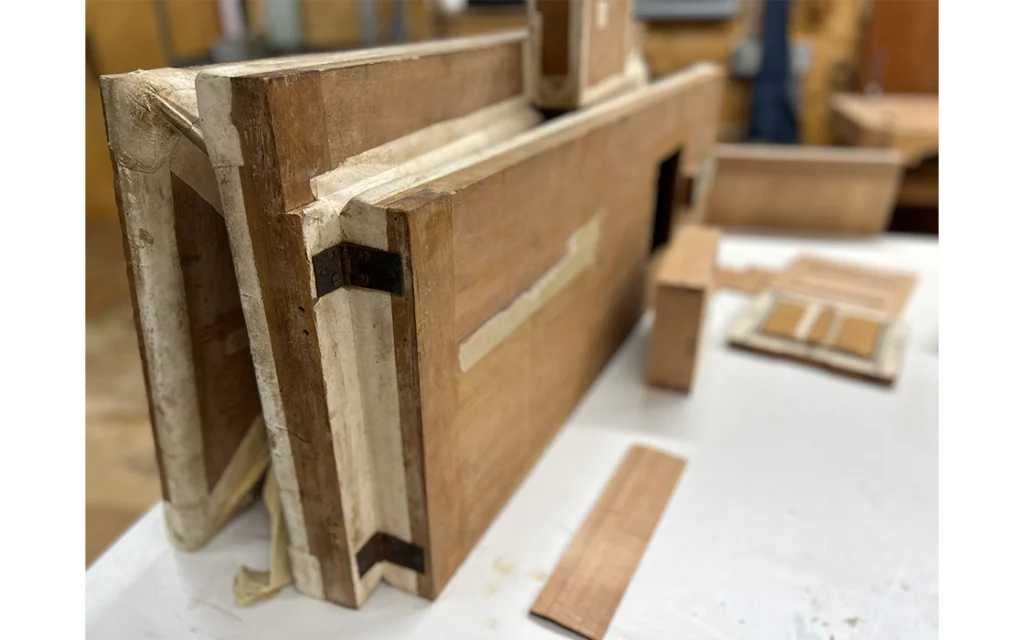
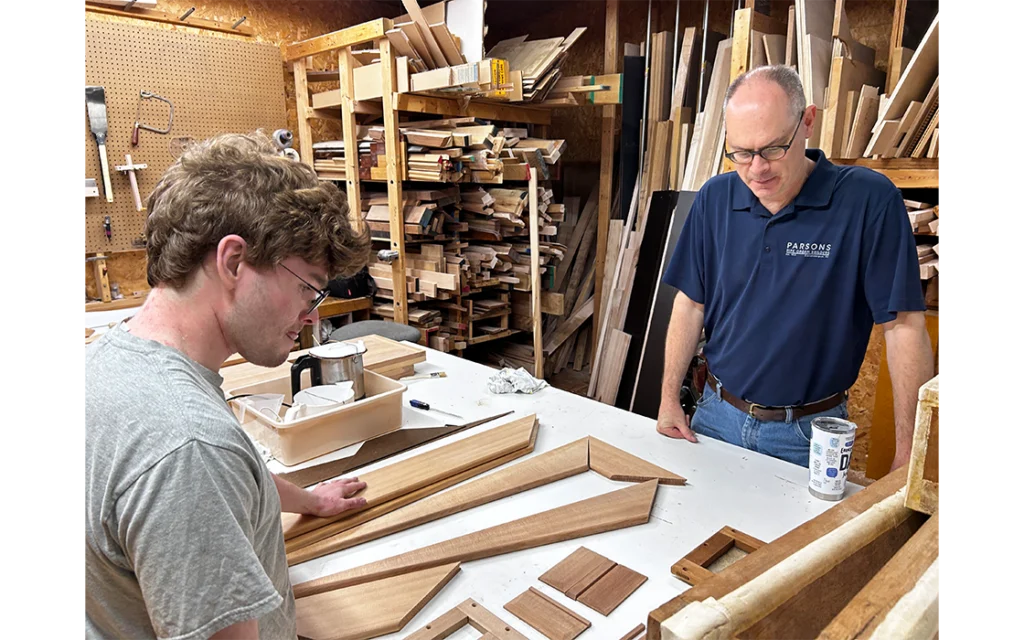
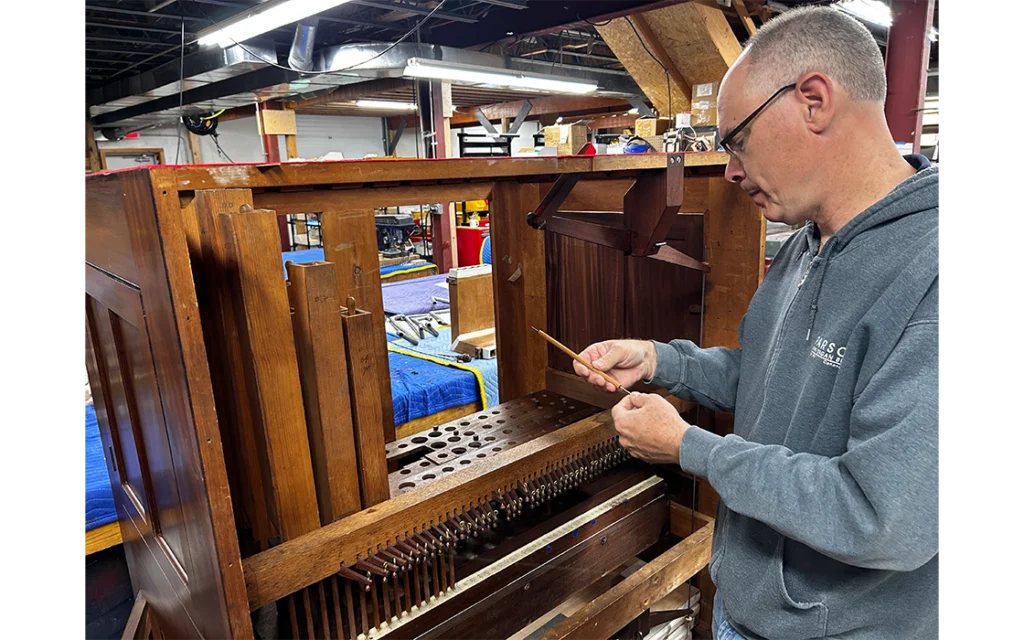
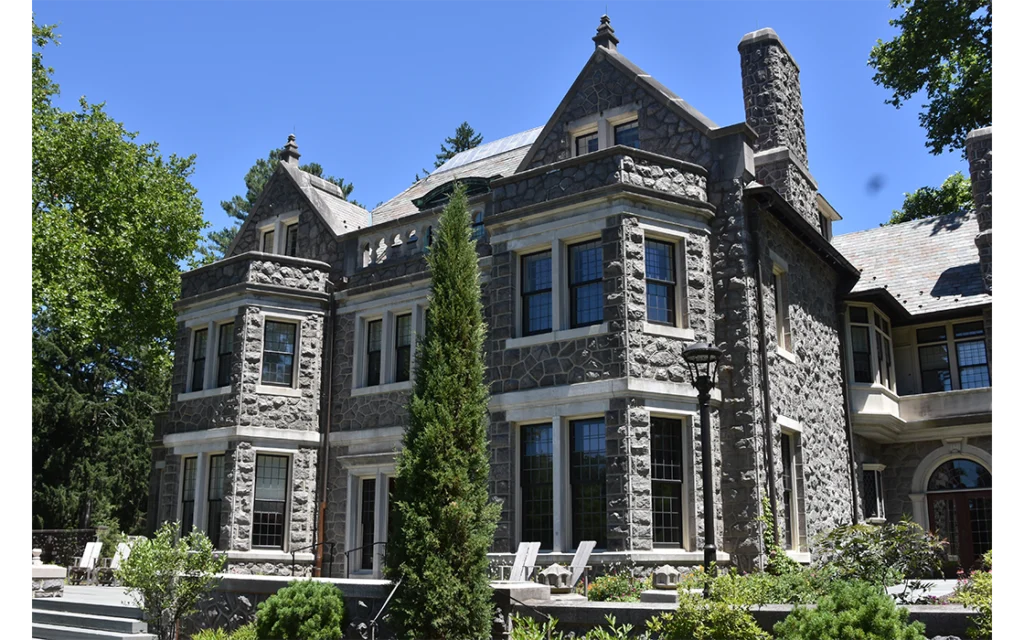
This rare ca. 1815 Hilbus chamber organ is now the property of the OHS. It has received a meticulous multi-year restoration according to the highest archival standards by Parsons Pipe Organ Builders and S.L. Huntington & Co. This priceless artifact has a history that peripherally connects it to the pioneering leaders of the young United States, and it is especially fitting that the organ will be unveiled to the membership in a festive celebration at Stoneleigh in Philadelphia during the 250th Semi-quincentennial of the signing of the Declaration of Independence!
This organ has had a colorful history, almost none of it true. The earliest legend that came with the organ, was that it was used on a steamship taking passengers between Washington D.C. and Boston, and rolled around the audience room during rough voyages, which is why the pipes were so badly mangled.
In actuality, the organ was the property of William Cranch Sr. (1769–1855). Cranch was good friends with George Washington, was appointed to the Circuit Court of the District of Columbia by President John Adams and elevated to Chief Justice by President Thomas Jefferson. The judge won the organ in 1824 in a raffle. The organ remained in the family until the death of his granddaughter in 1936. After being bought and sold twice more, it was given to the Strawberry Banke Museum in 1973. The organ remained in storage until the Museum deaccessioned the organ in 2017 and donated it the Organ Historical Society. Family legend said William played the organ as a teenager living at his father’s house in Braintree, Mass. (he may have played an organ in his father’s house, but not this one), and the heavily damaged condition of the pipework was ascribed to Cranch grandchildren who allegedly used the pipes as toy whistles—in this case probably more truth than legend.
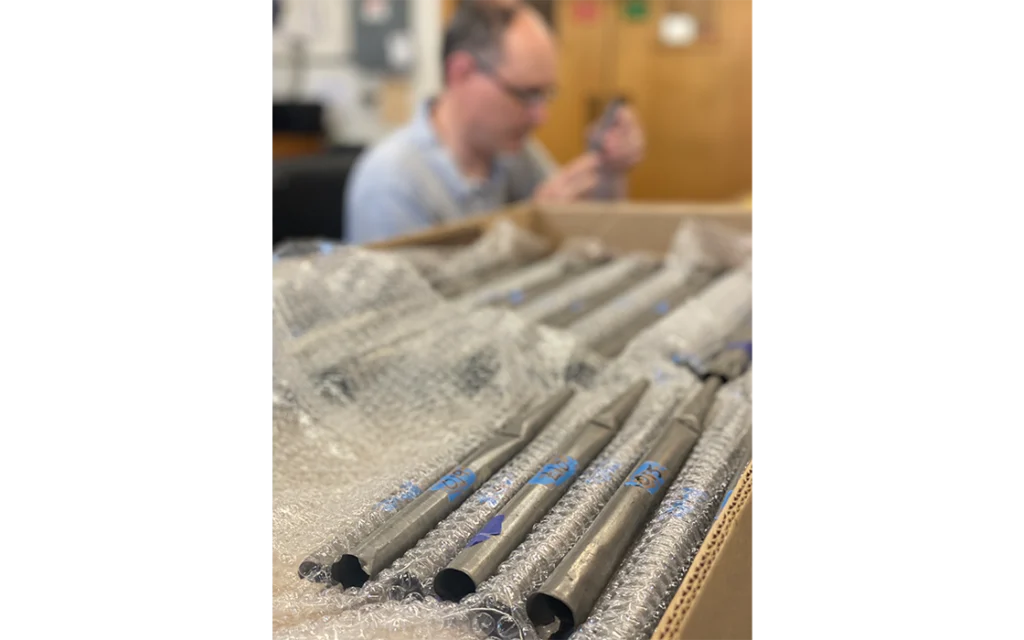
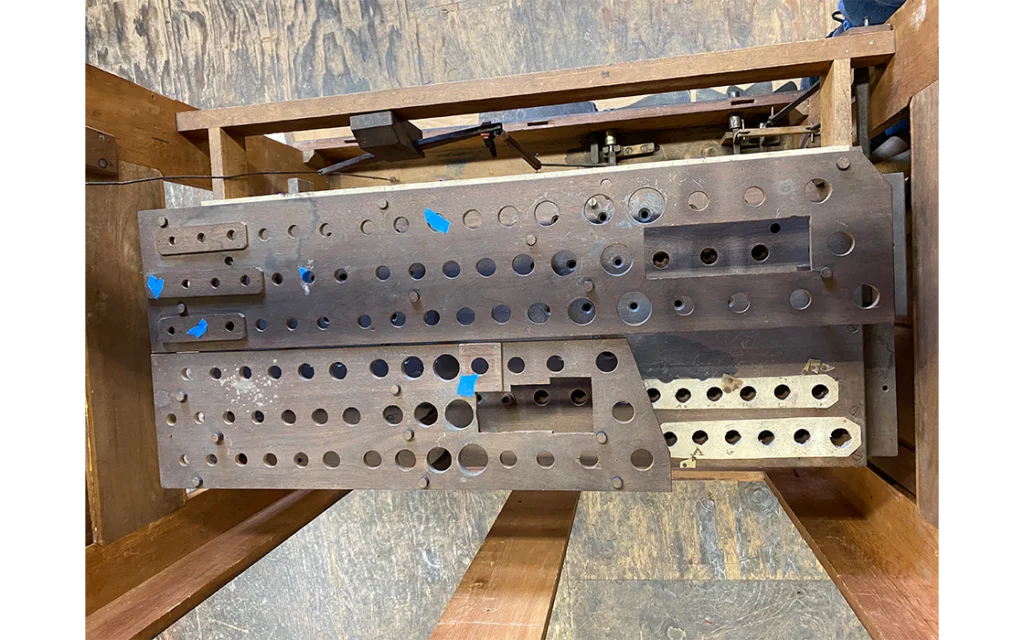
The organ was assumed to be built by Jacob Hilbus, but we were doubtful. The simple organ case was nearly identical to chamber organs built by John Avery of London around the turn of the 19th century. There was no nameplate, nor could we find a signature anywhere in the organ. We traveled to Broad Creek, Maryland to study an authenticated Hilbus, itself a rebuild of an 18th century organ by Snetzler, taking note of the minutest details and construction marks. The owners allowed us to take minute scrapings of the pipe metal for analysis. We also took scrapings of the OHS organ’s pipework and three lead bellows weights and found the metal to be very similar with a surprisingly high silver content. We used electron microscope analysis of the pallet covering which was unlike anything we had seen before (likely a product of age) as well as a minute scrap of the bellows leather along with various kinds of felt—the pallet coverings looked more like a dense felt than leather. The analysis came back that the two samples were indeed sheepskin. We were allowed the use of a scope to see inside the double-rise reservoir, and low and behold, there was Hilbus’ signature, authenticated by a hand-writing expert after comparing it to the Broad Brook signature. Cranch had a niece who was an accomplished artist and sketched typical household life down to the smallest detail, such as the decoration of the chamber pot in one of the bedrooms. In her preserved folio of drawings were found two astounding images of the organ, one a lazy summer afternoon with the family on the porch, with the organ seen through the wavy glass of a window. In the most exciting drawing of all was a portrait of a family evening. In one area people were sitting having conversation, another corner had family around a table playing cards, but the most shocking discovery of all, was the organ being played while family members danced. This not only showed the long pumping foot pedal with the player’s leg high in the air on the upstroke, but the detail even showed the two stop-action pedals (this two-stop organ has no drawknobs). The detail of special interest to us, was the organist stool about which we hadn’t a clue but were charged with providing. This is the only image anyone has ever seen, of a pre-Civil War parlor pipe organ in use, answering a crucial question—how were they actually used?
The restoration of this organ and its supporting documentation is the most thorough accomplished to date in the U.S., although such granular research, attention to the minutest detail of restoration, and thorough documentation is routinely part of historic restoration in Europe. This organ’s once-removed association with the founding fathers of this great country makes this an especially precious musical artifact and a true jewel in the OHS crown. It is doubling fitting that the unveiling to the membership of this priceless musical instrument will take place during a gala musicale at Society headquarters in August 2026 as the nation celebrates its 250th anniversary in the city of its birth.