Project 34
Ginter Park Presbyterian Church
Richmond, Virginia
2012
45 Ranks – 3 Manuals & Pedal
Electro-mechanical Action
Remanufacture
1964 Robert Noehren
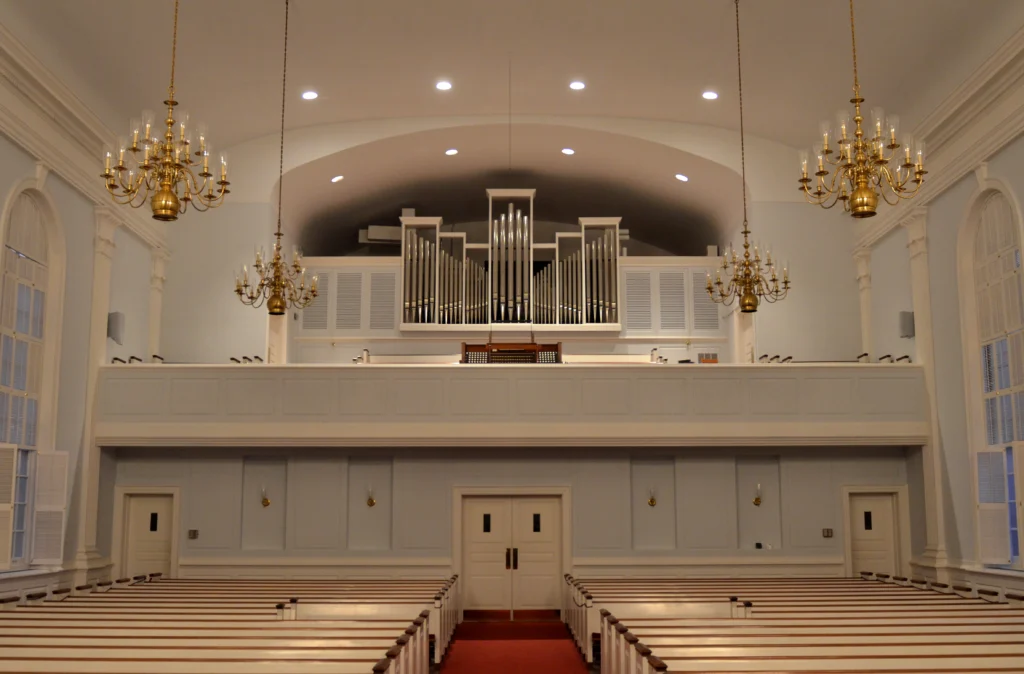
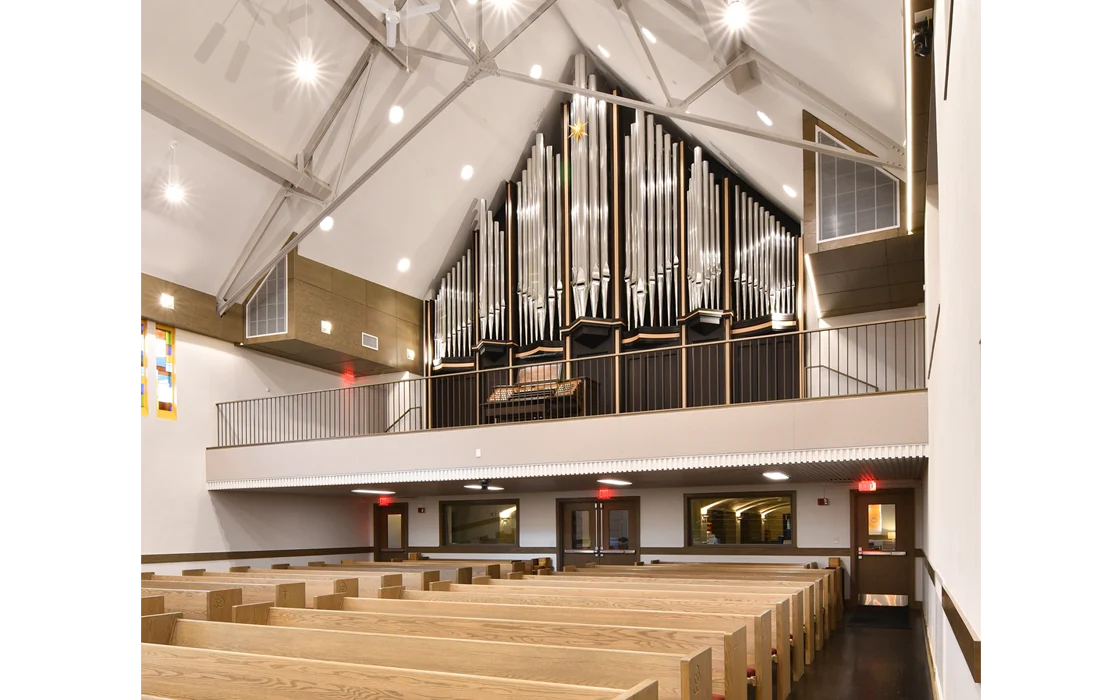
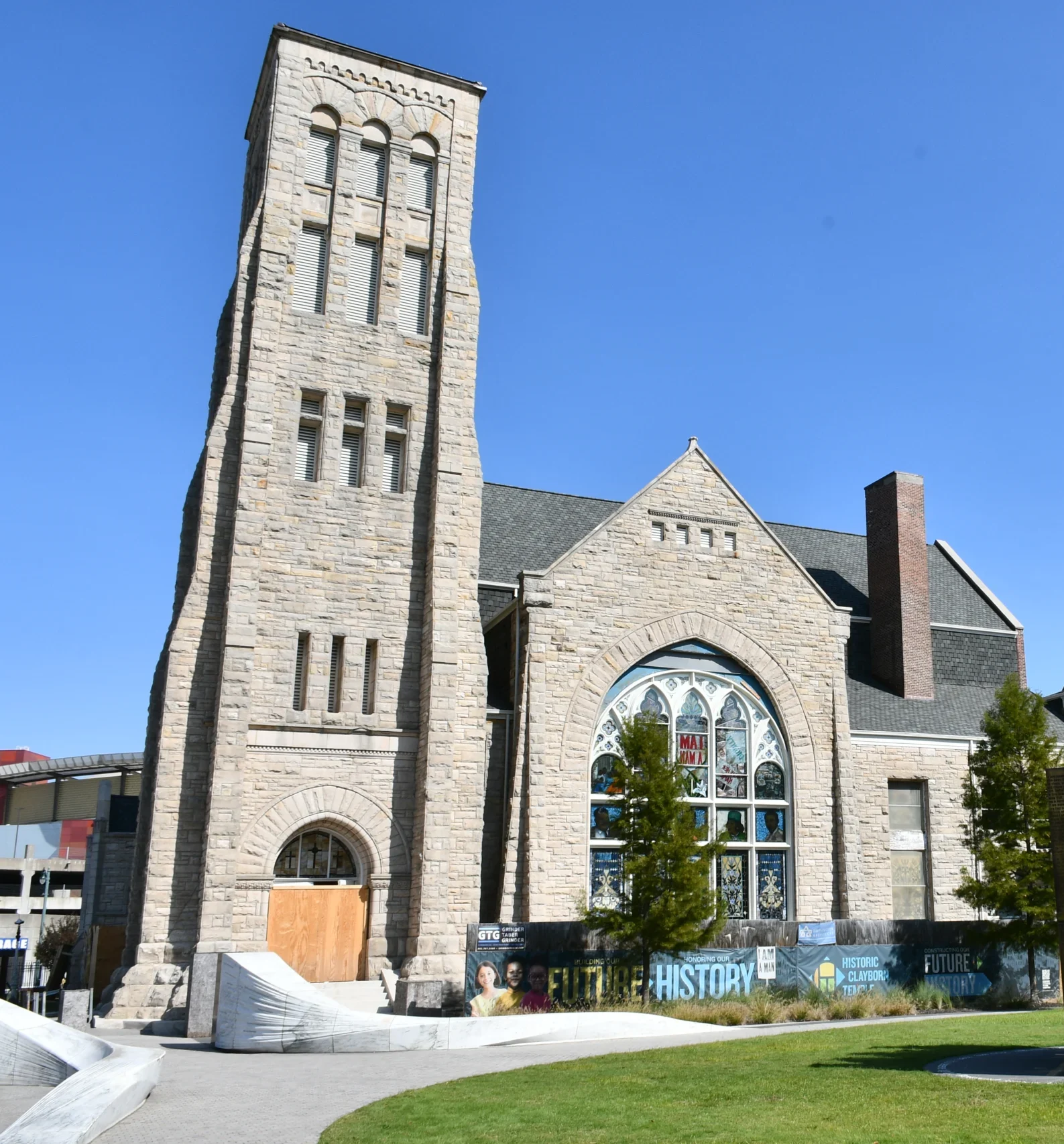
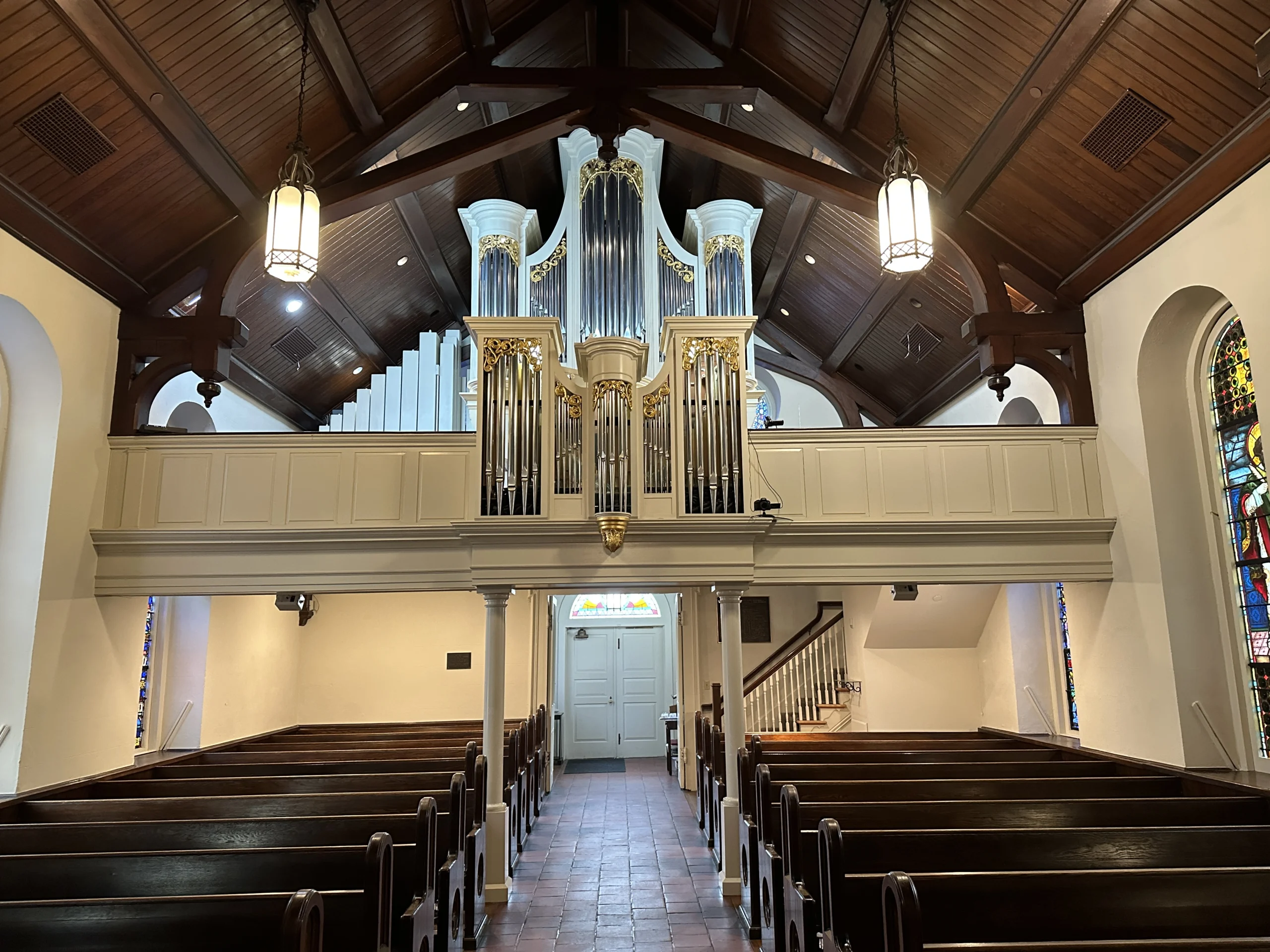
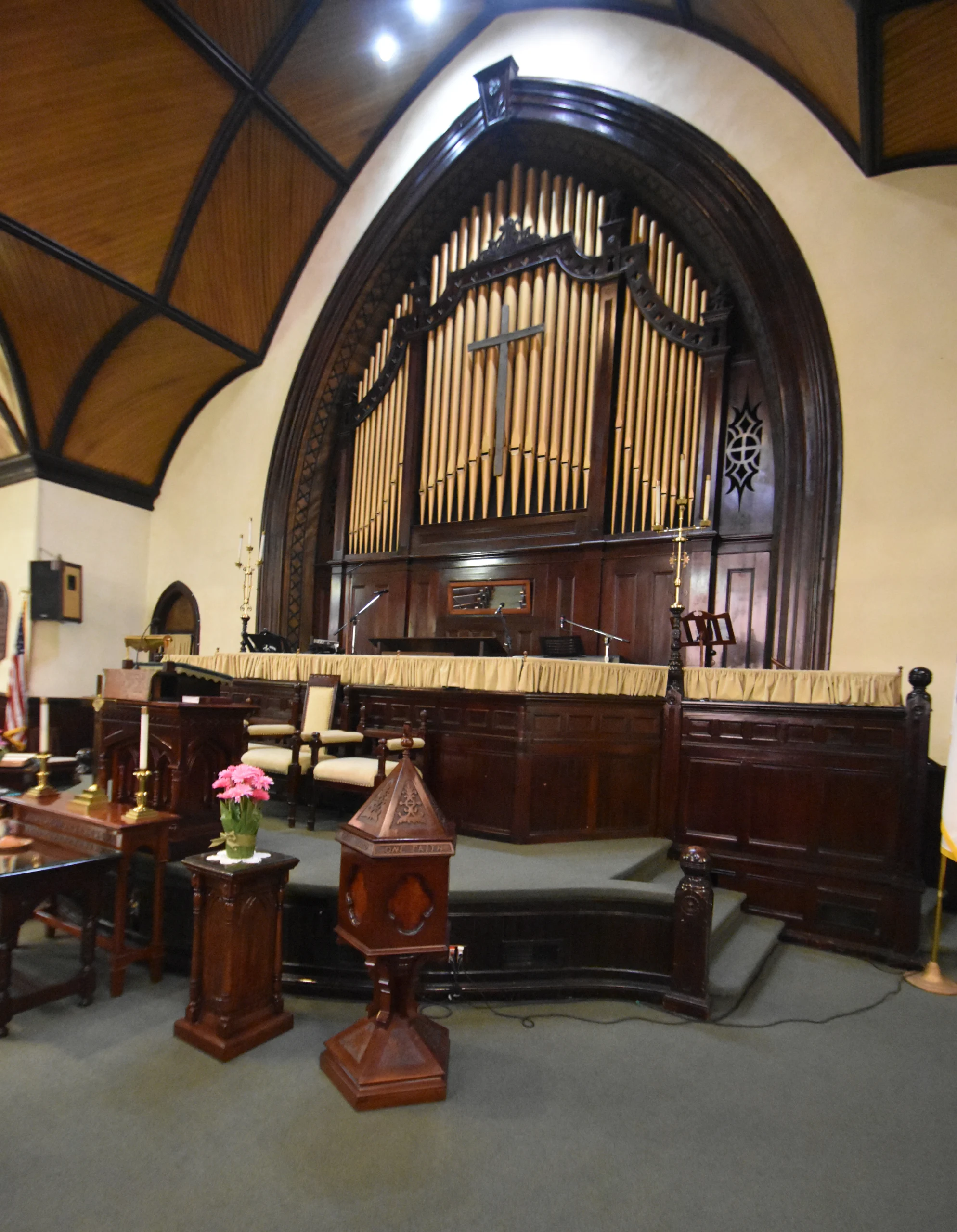
When Ginter Park Presbyterian Church relocated from Union Presbyterian Seminary (Richmond, Virginia) to a new church home in the late 1950s, plans were made for a new pipe organ. Richmond has always supported excellent organ music, and Ginter Park Presbyterian was no exception. Mr. Robert Noehren (1910-2002), noted recitalist, recording artist, educator, and scholar, was selected to design and build a new three-manual, 48-rank instrument with a fully electric action and console, which would be dedicated in 1964. In keeping with the revolutionary trends of the decade, Mr. Noehren’s overall design expressed his belief that the “ideal” pipe organ of the future would emerge through eclecticism, progressive methods, and modern technology. While the Noehren organ was avant-garde even in its own time, it served the church well over the years.
By 2007, mechanical needs led Mr. Douglas Brown, Director of Music at GPPC, and Dr. Ardyth Lohuis, organ professor emerita at Virginia Commonwealth University, to discuss the future of the instrument. Aging electro-mechanical switching was unreliable and unsafe, the console was worn, and the winding system was leaky. Should the organ be restored or replaced?
While mechanical needs were pressing, the organ was also suffering from a sense of overall tonal fatigue. As a result of decisions made during the manufacturing and installation processes, many pipes in the organ were not speaking correctly. Mr. Noehren had “cone” tuned many pipes which had really been built for slide tuners, and over the years the weight of the tuning cones damaged and bent these pipes. Other pipes were improperly racked, resulting in bent pipe toes. Not only would collapsed pipes need restoration, the issues peculiar to the original Noehren design needed to be addressed if the organ would have a sustainable future.
There were other flaws in the original design. At the time of the installation, Mr. Noehren indicated that his organ would represent “every important factor from the Baroque to the present.” However, his specification provided little in the way of foundation tone: of the original 48 ranks, 24 were mixtures; there was no 16’ Principal in the pedal division; and many 8’ ranks were incomplete, sharing a “common” bottom octave for economy. The original winding system was governed only by Schwimmer regulators; only in 1995 was a static reservoir added. Would additions and improvements integrate successfully into the existing ranks? Were the existing chests and wind system adequate for stable pipe speech?
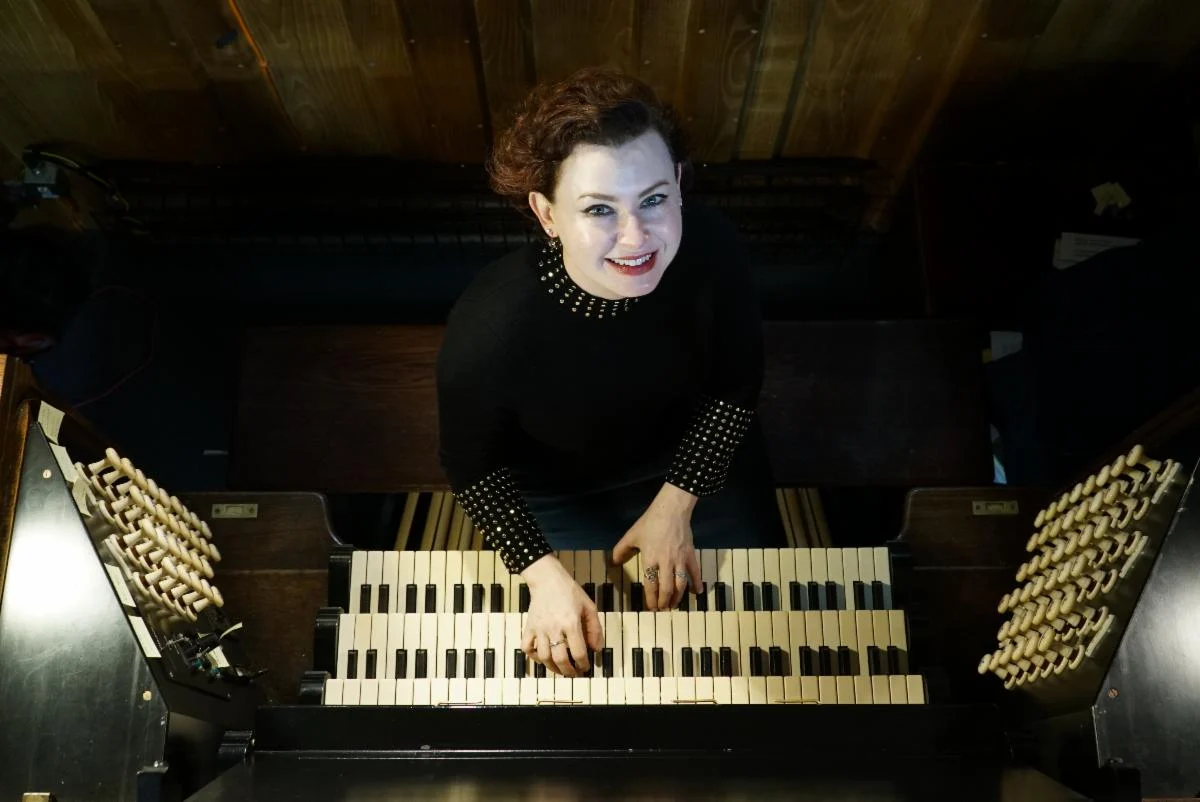
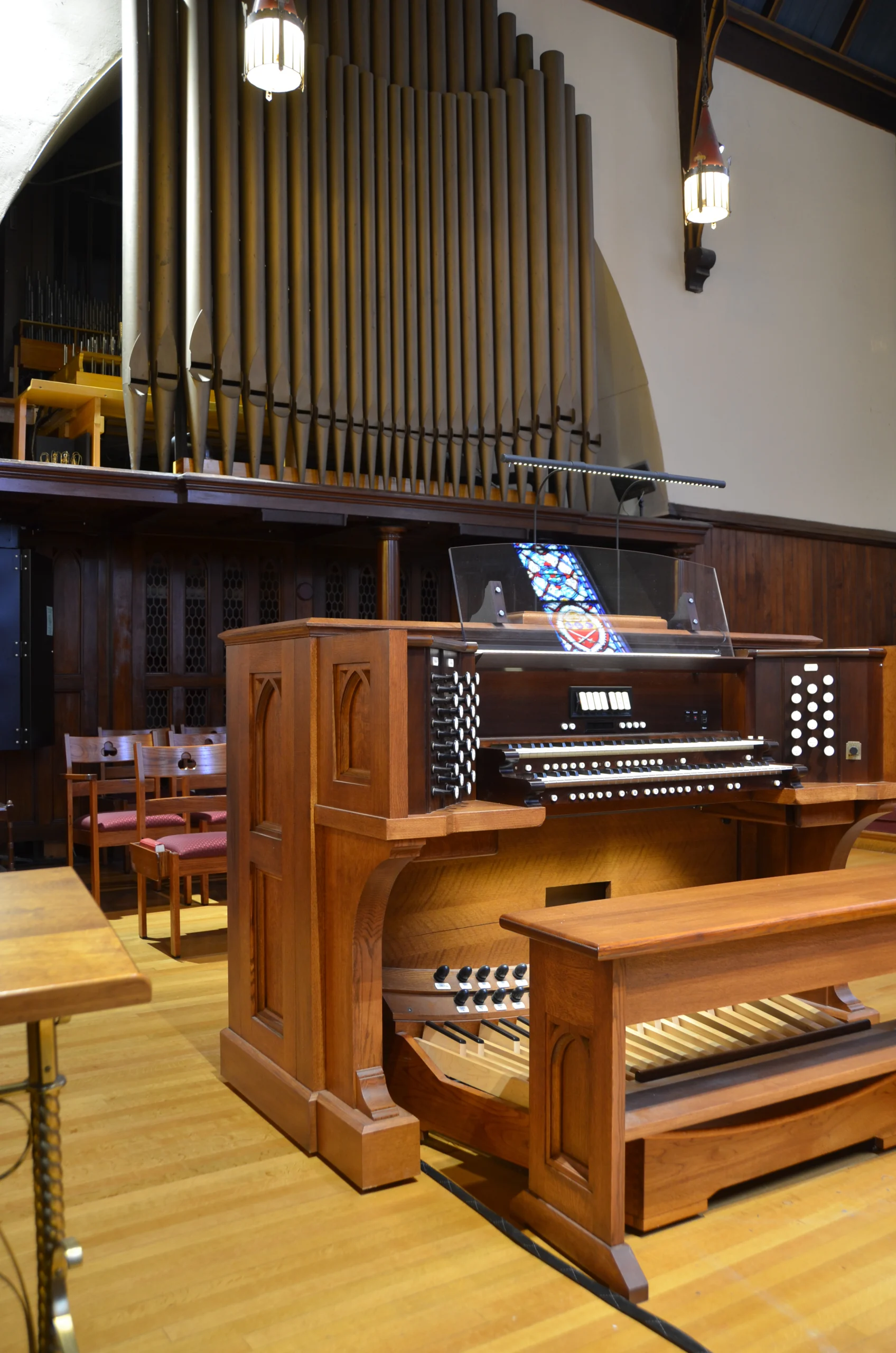
In October 2010, Ginter Park Presbyterian Church accepted Parsons Pipe Organbuilders’ proposal. Work began in summer 2011. Old electro-mechanical switching was replaced with a unified solid-state system, and aging wiring was replaced to meet modern codes. The aging console was replaced with a new, low profile console constructed of American Black Walnut to allow better communication. Terraced stop jambs of Brazilian Rosewood and a new music desk were installed. Keyboards of polished bone and ebony with tracker touch were fitted; the pedalboard was replaced to meet AGO specification; and solid-state combination actions were fitted with digital displays.
Tonally, the goal was to achieve a more blended, cohesive sound, while remaining respectful of Mr. Noehren’s original tonal concepts. To make our goals possible, we installed a large wedge bellows winding system with several smaller switchable concussion bellows at the windchests, allowing for flexible yet stable wind supply. Mr. Duane Prill, tonal director at our firm, worked with Mr. Brown and Dr. Lohuis to determine necessary additions and improvements that would invigorate the organ. In the Great division, we added a larger scale 16/8’ Trumpet (also playable in the Pedal) and prepared for an 8’ Flute Harmonique. In the Swell division, we fitted a more expressive swell engine, installed a new Geigen Principal/Octave to provide a basis for a true principal chorus, and extended the tenor C Hautbois to 16’ (also playable in the Pedal). In the Pedal division, we re-voiced the 16’ Open Wood Principal (added in 1995 by David M. Storey, Inc.) and added a 16’/8’ Violone and a 32’ Resultant to give the organ the “gravitas” it lacked. All pipes were repaired, re-racked, re-voiced and regulated at a new, slightly higher wind pressure. Voicing work was finished on-site in July 2012.