Project 28
First United Methodist Church
Livonia, New York
2007
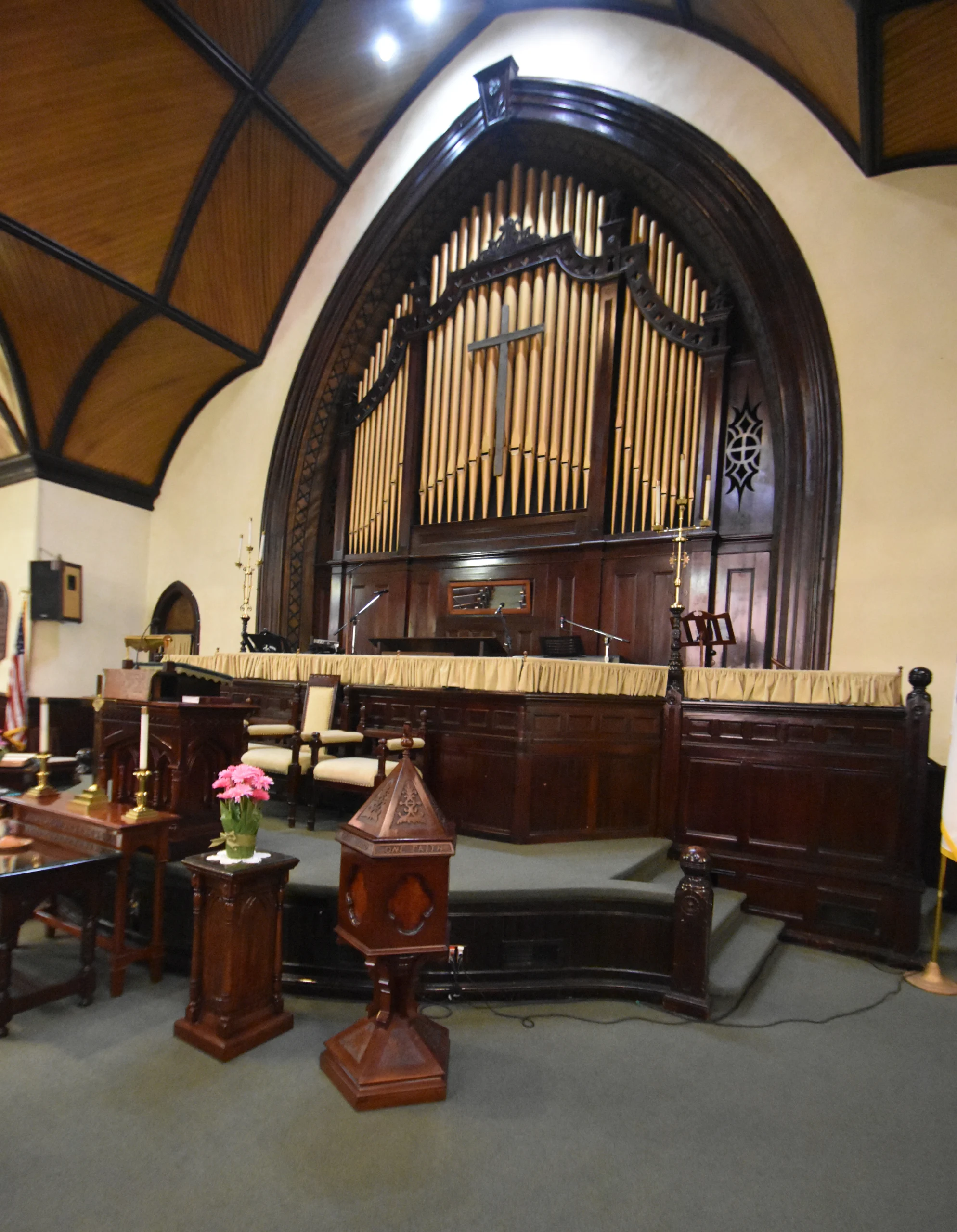
1902 M.P. Möller, Opus 420
13 Ranks – 2 Manuals & Pedal
Tracker Action
Restoration & Relocation
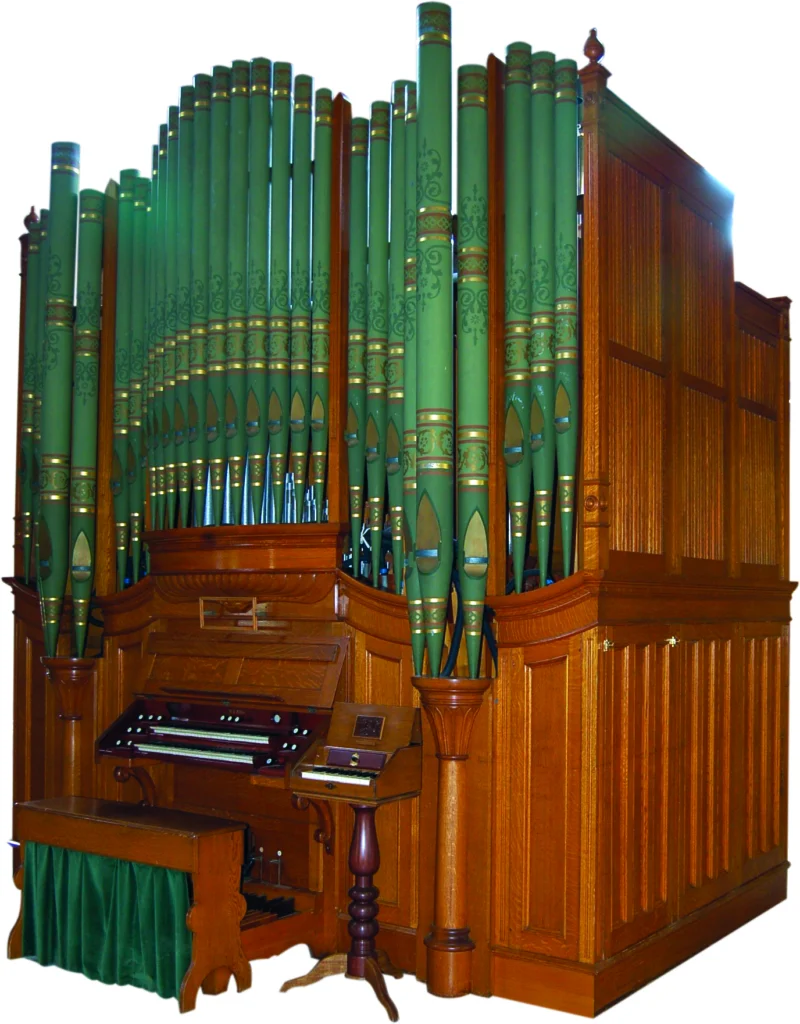
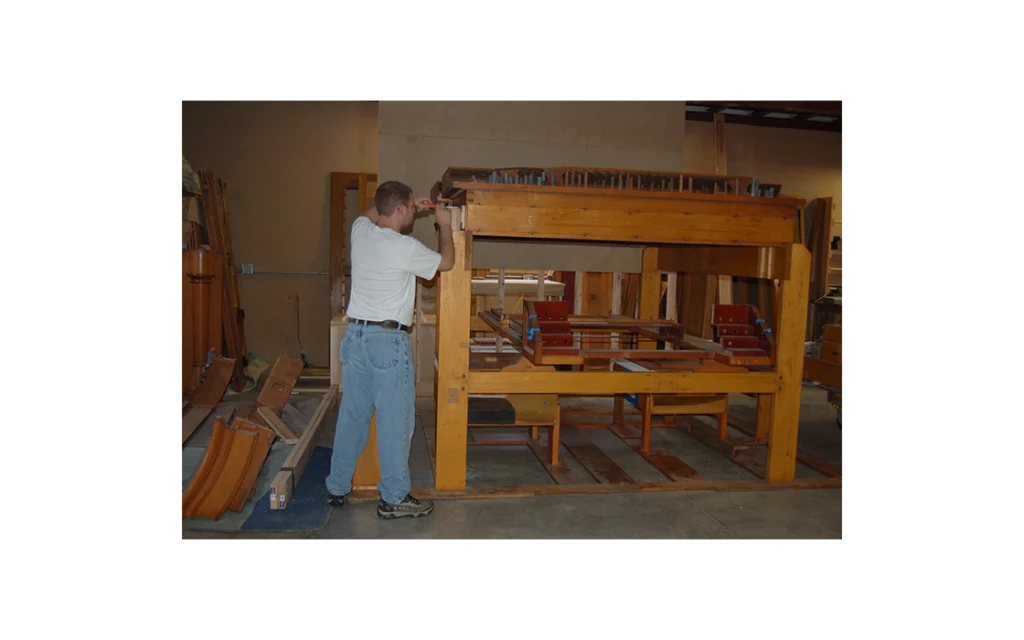
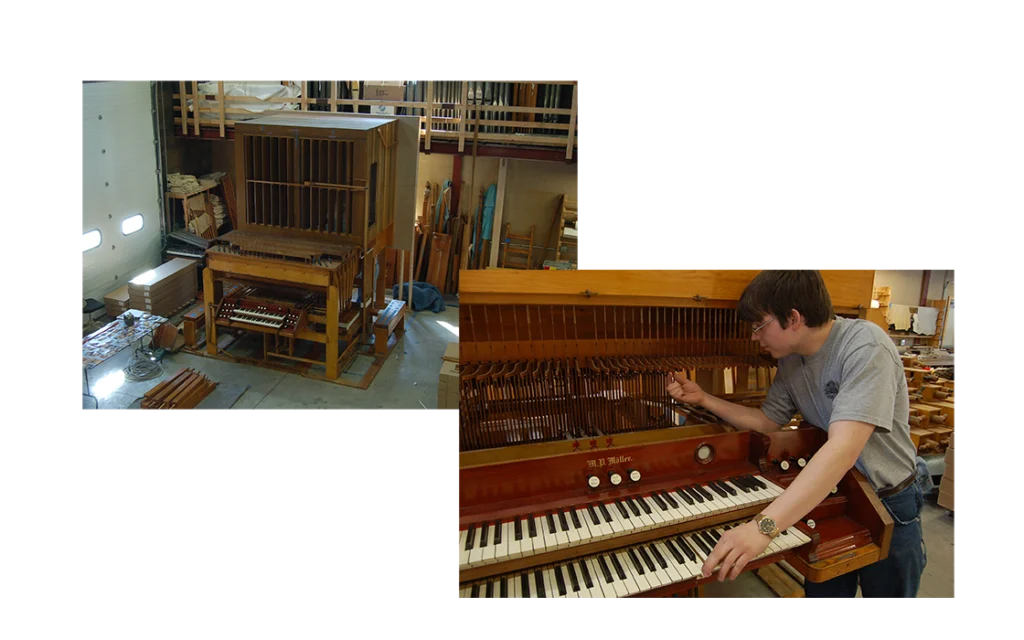
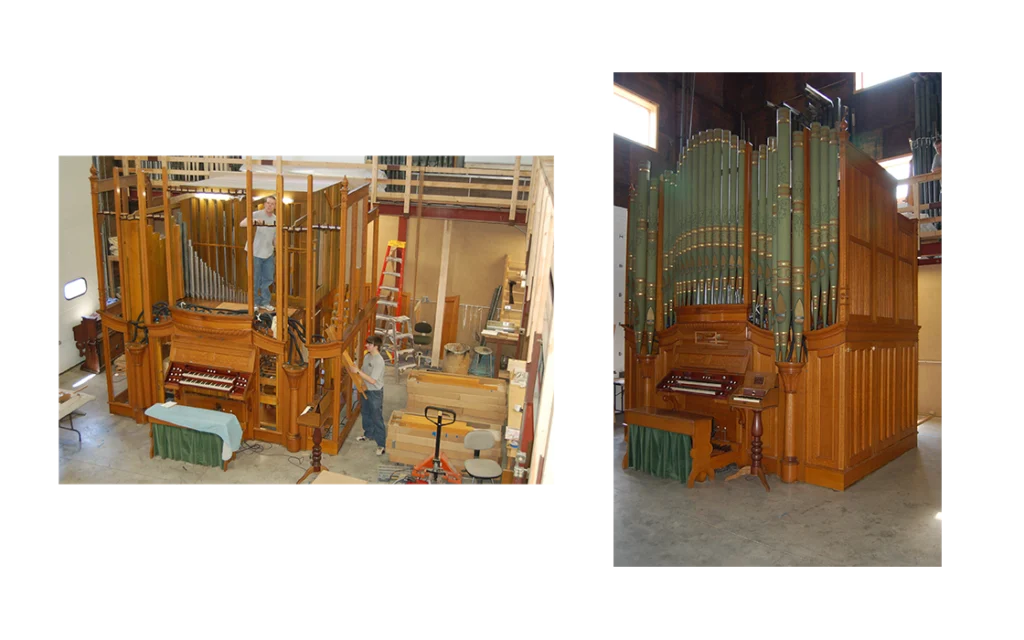
The United Church of Livonia, while building a new, modern church facility, wanted to retain a valuable element of their past by moving their 1902 M.P. Möller Organ into the new building, which will be ready this month. Our goal was to restore the organ using the same methods and materials of 1902. Components were cleaned, but no refinishing was done.
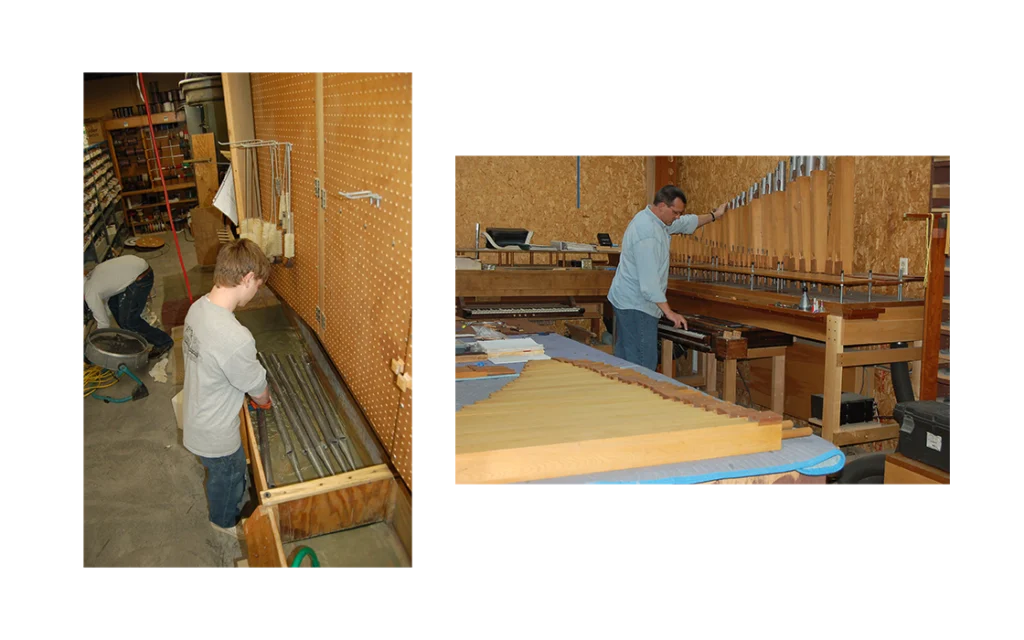
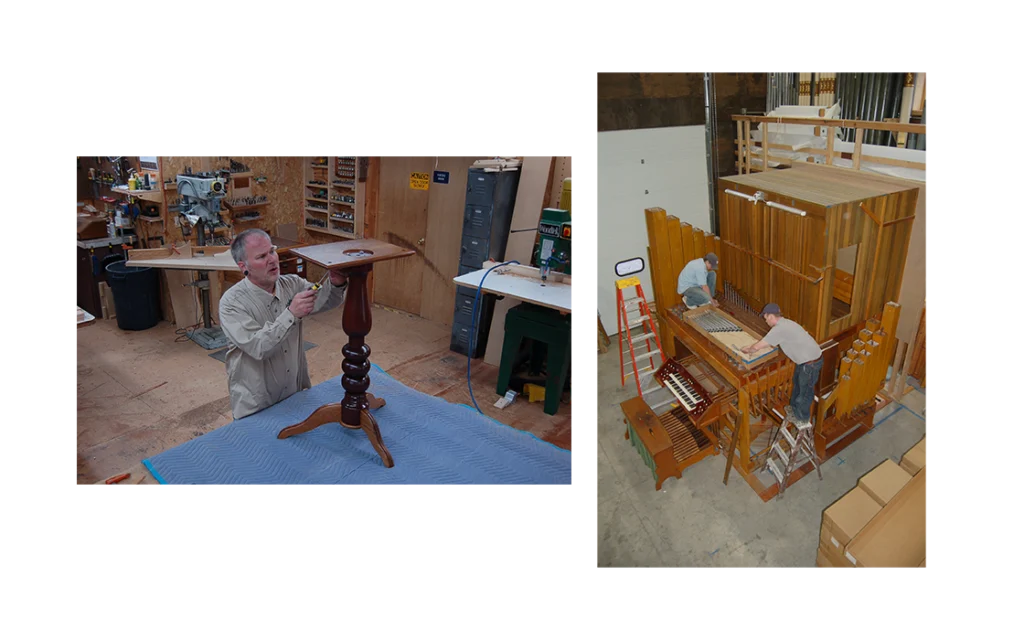
Cracks in the Swell and Great wind chests were carefully sealed by pouring the tone channels to stop leaks and improve tuning stability. Leather gaskets were replaced throughout the organ and interior parts were cleaned. Many of the pedal and manual trackers (linkages that connect each key to a valve) were damaged or broken. These were carefully fabricated to replicate the originals.
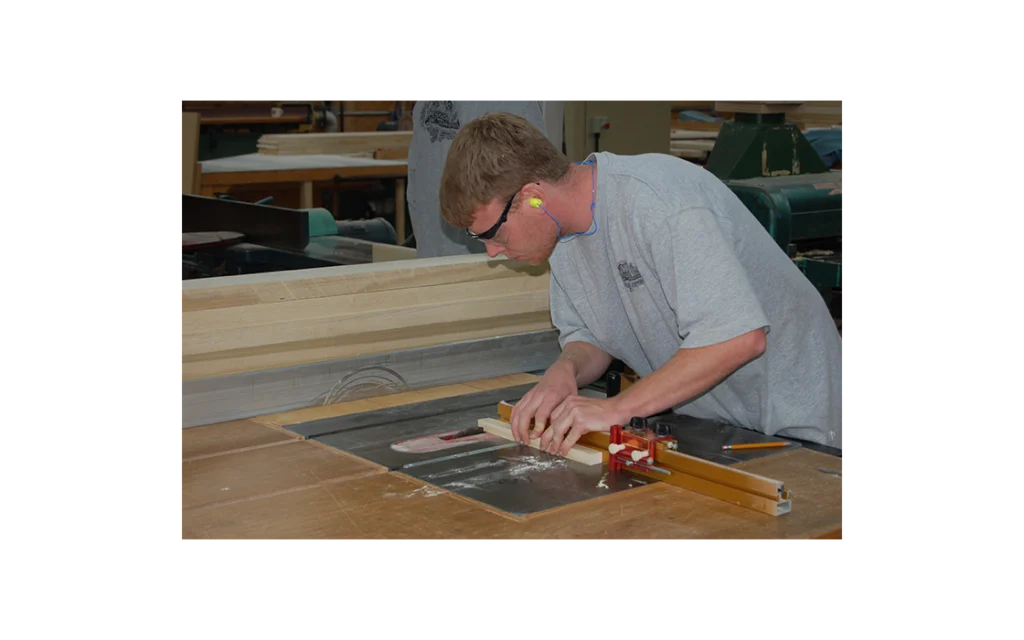
The swell box, which encloses the pipes of the second keyboard and provides expression, was extended to provide tuning access. The back of the original box was used for the side panels and a new roof panel was manufactured in our shop using the materials and construction methods of the original builder.
The original organ had one large wind reservoir that was filled by the hand-pumped feeder bellows. At some point in the past, this was removed and replaced by two, smaller wind pressure regulators. The church elected not to restore the original bellows and pumping mechanism, but the original handle still remains. The pedal stop action and wooden wind conduits, removed with the original bellows, were reproduced in a manner consistent with that of the original builder. A new blower and static wind pressure regulator will be located in a special room outside the sanctuary.
To protect this historic instrument from excessive drying, we have installed a customized humidification system that will circulate moist air throughout the internal components of the organ.
The electrically operated chimes are not original. A custom stand was designed to isolate the chime keyboard from the historic organ. The chimes and striker mechanism are attached to the church wall to keep them separate from the organ structure.
All restoration work, pipe data and modifications have been carefully documented in accordance with procedures outlined by the Organ Historical Society.