Project 16
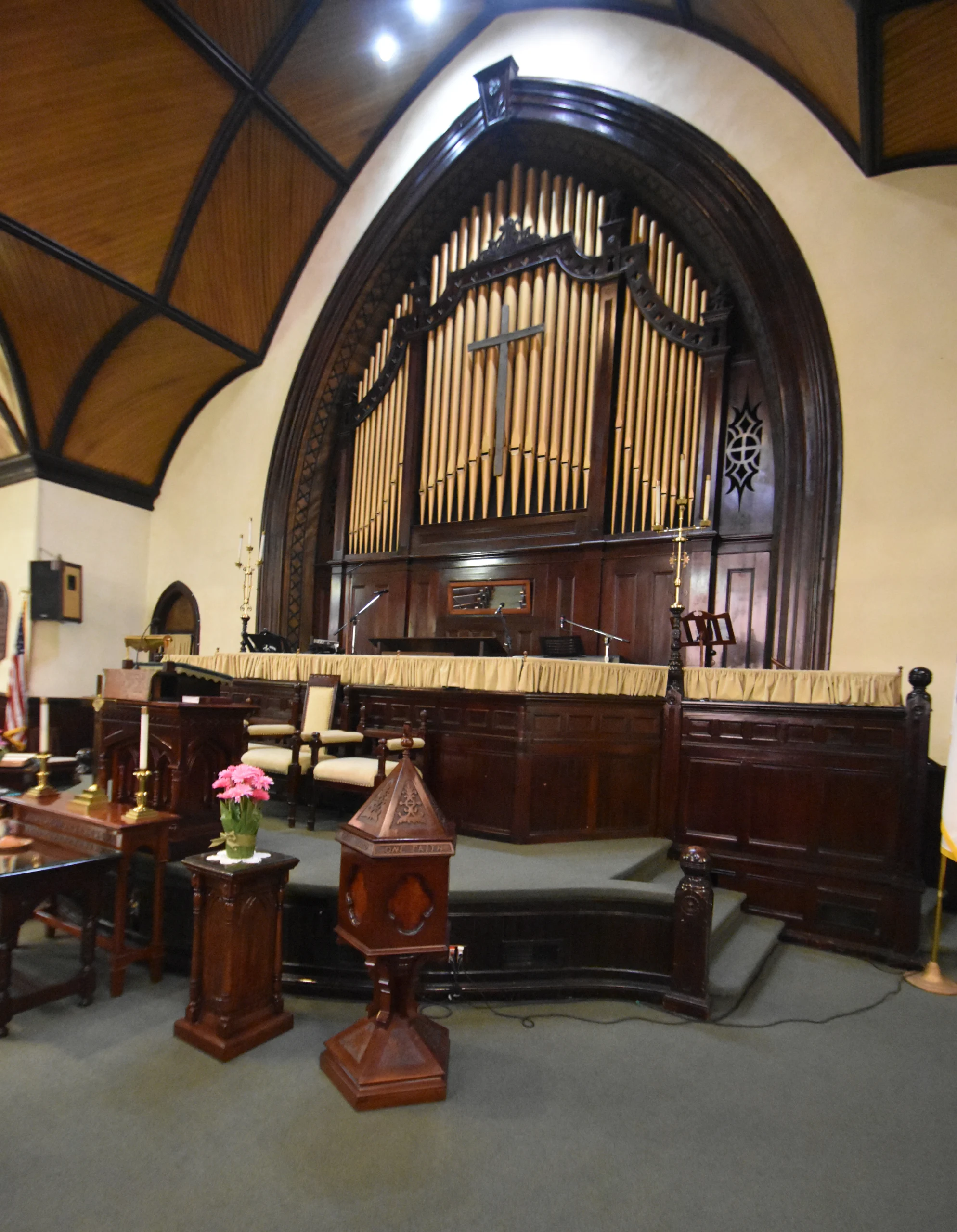
First Baptist Church
Marietta, Ohio
31 Ranks – 3 Manuals & Pedal
Electric Slider Action
Remanufacture
1909 Stevens
From the Dedication Brochure:
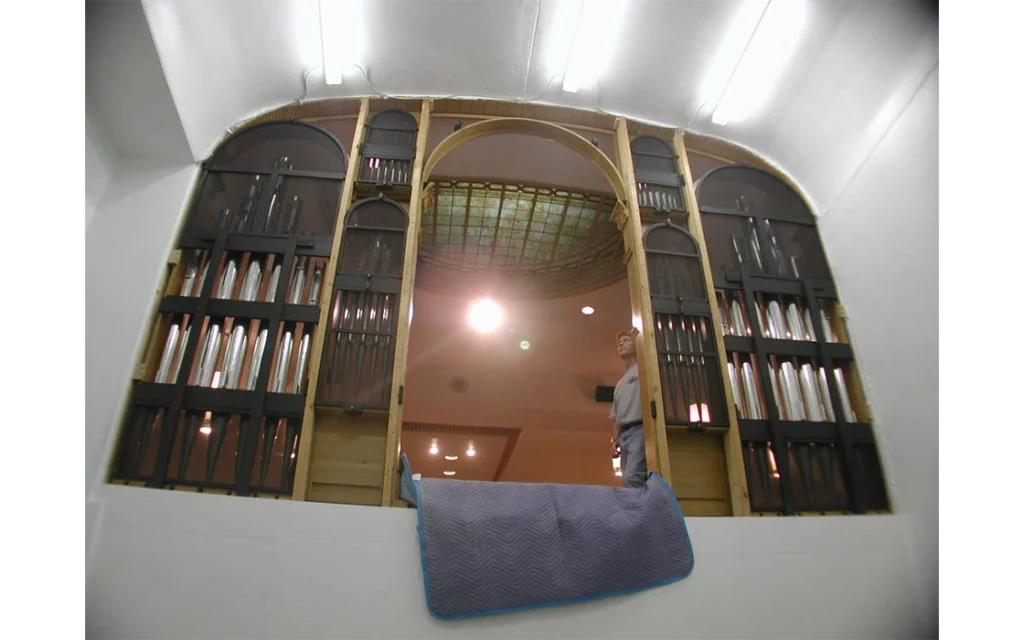
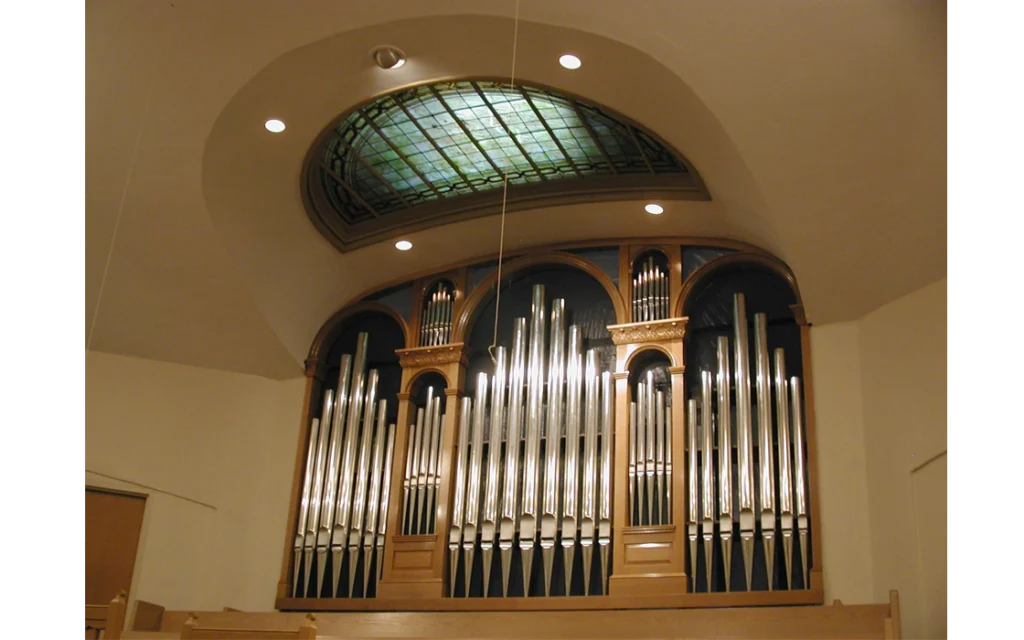
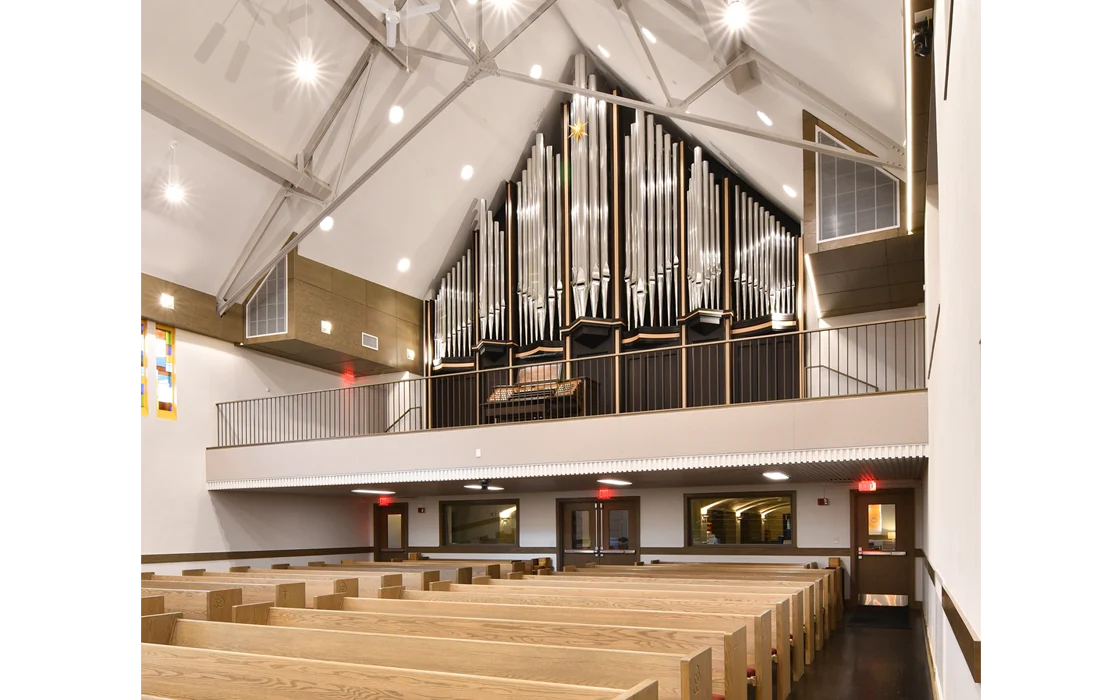
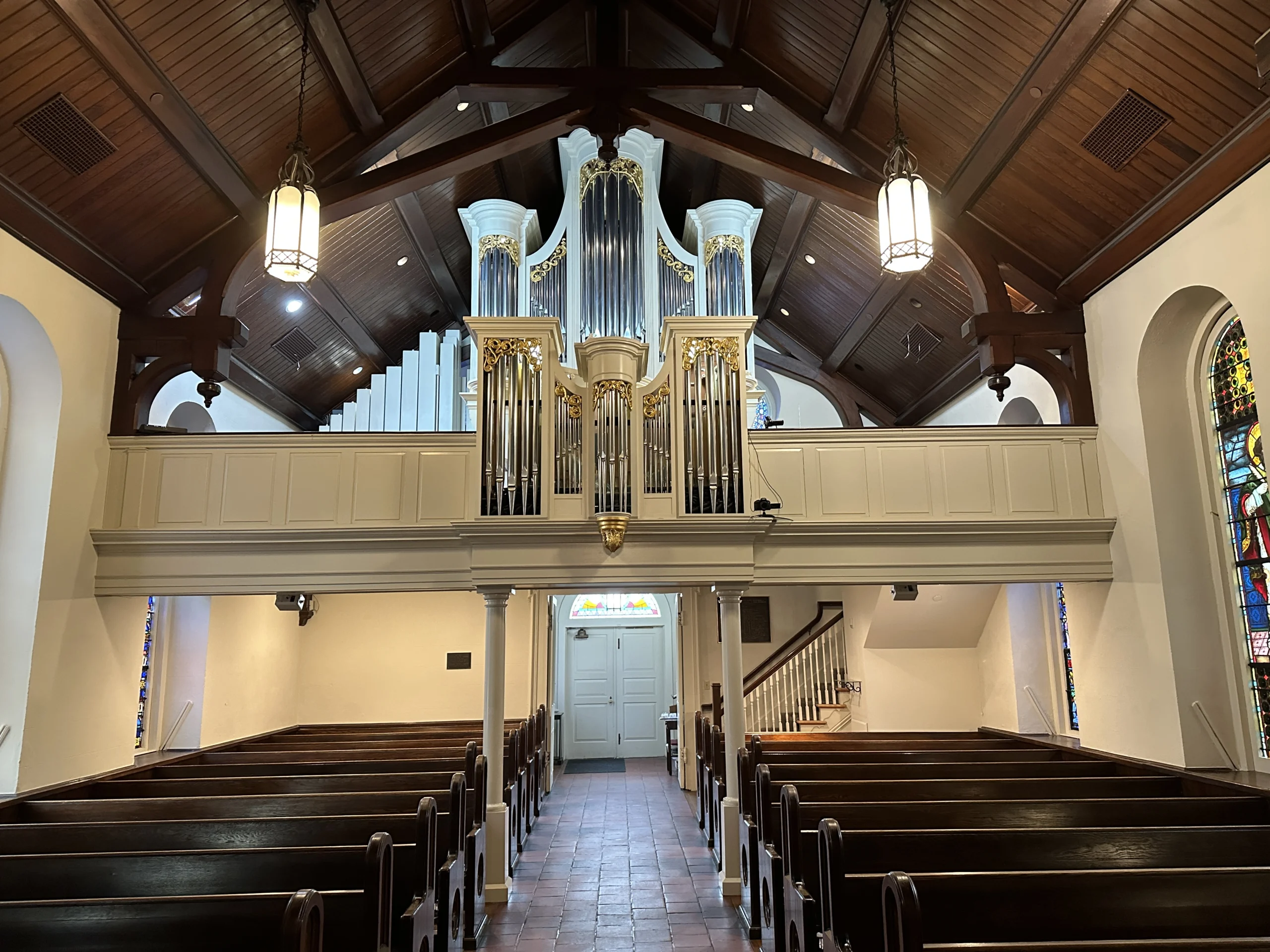
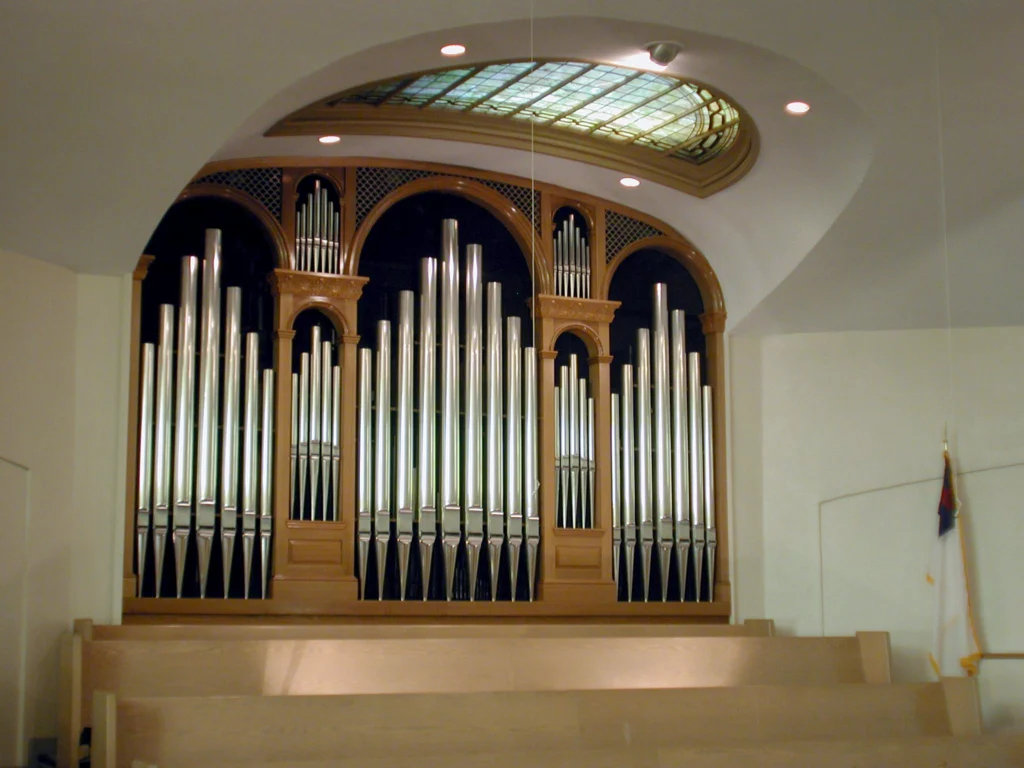
From our first meeting with the church, to the final tonal finishing of the organ, we were faced with several unique challenges on this project. Issues such as: how to reconfigure the organ to allow for more pipework and enable proper tonal egress; how to design a façade that would be both functional and interesting; and, probably the most difficult, how to compensate for the sound absorbing acoustic of the room.
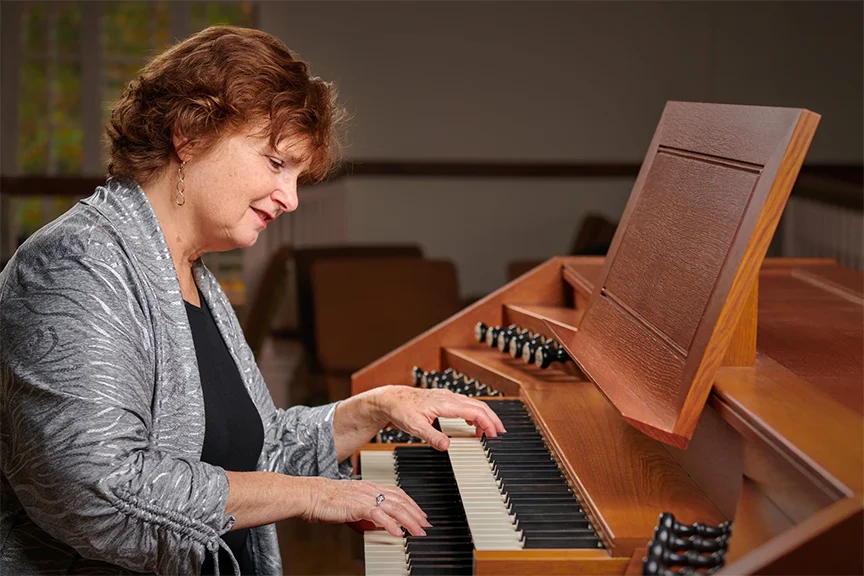
It is always exciting to build an organ for discriminating musicians. Both Elizabeth Cummings, the organist, and Mr. Robert A. Griffith, advisor, were very helpful in developing the tonal concept for this instrument. Understanding the musical requirements of this congregation was fundamental to successfully designing an organ to musically support worship and stand the test of time. It was our goal to combine tonal versatility and quality workmanship to ensure that the organ, being designed to last for hundreds of years, will not be discarded in lieu of changing styles.
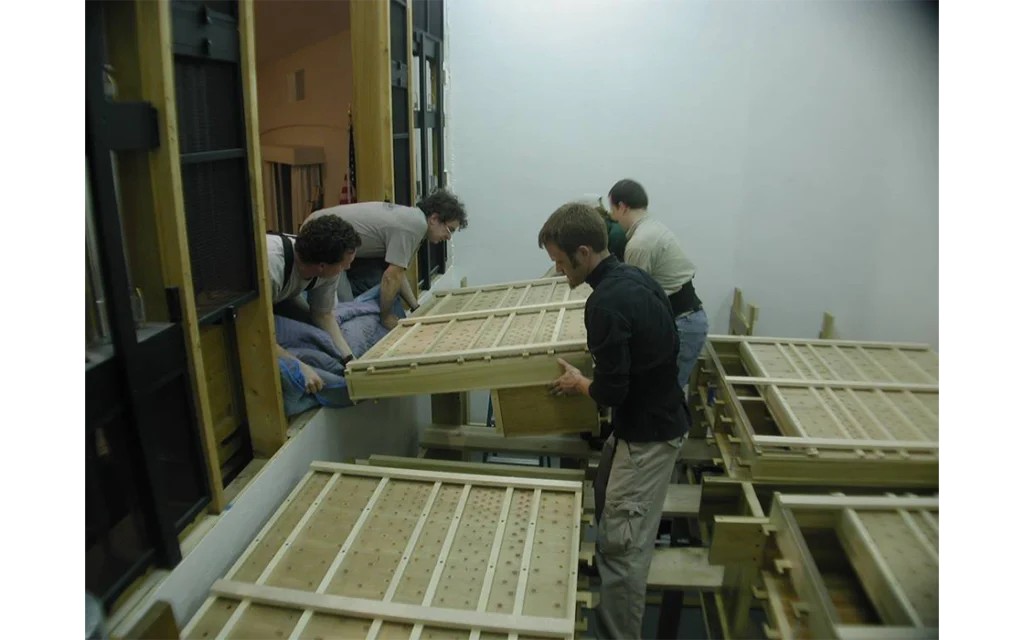
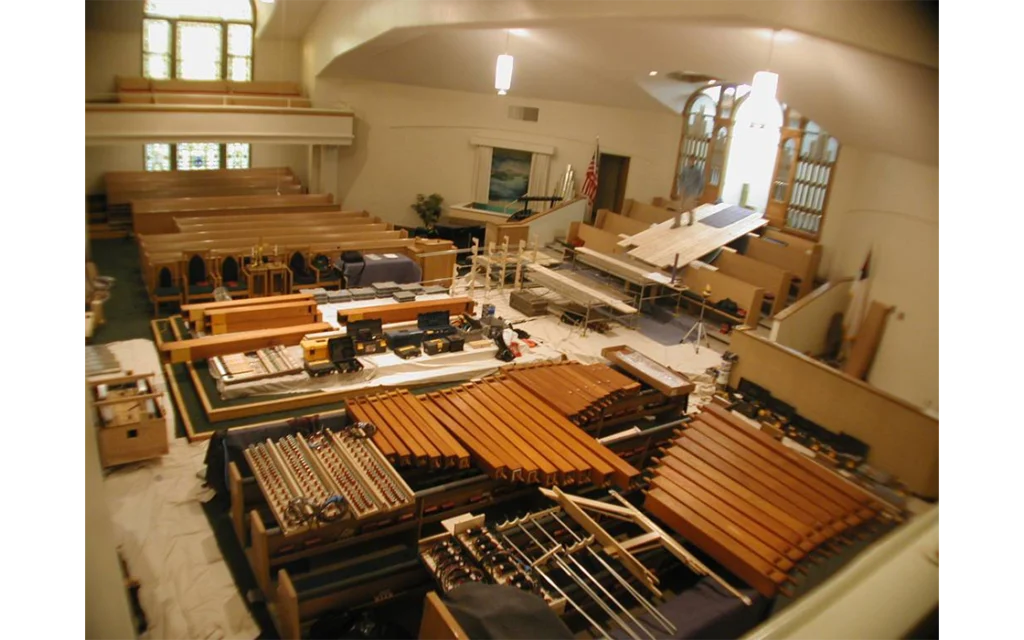
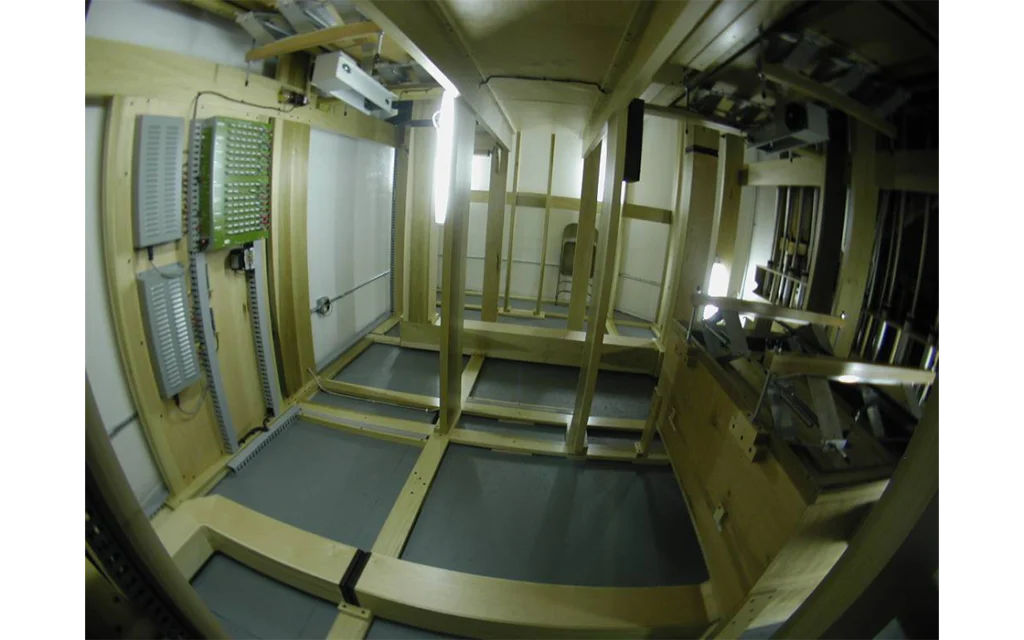
Once the stop list was determined, we developed a comprehensive plan for the physical layout of the pipework, windchests, winding system, structure, expression control, and peripheral systems. We included in our plan the re-use of the best components and pipework from the original Stevens organ dedicated in 1909. This is the process we have termed remanufacturing – that is, building a new organ using as many of the quality components from the old organ as possible. This, we feel, is simply good stewardship. In your pipe organ we retained the static wind pressure regulator (located in the lower level blower room) as well as many ranks of pipes, noted on the stop specification.
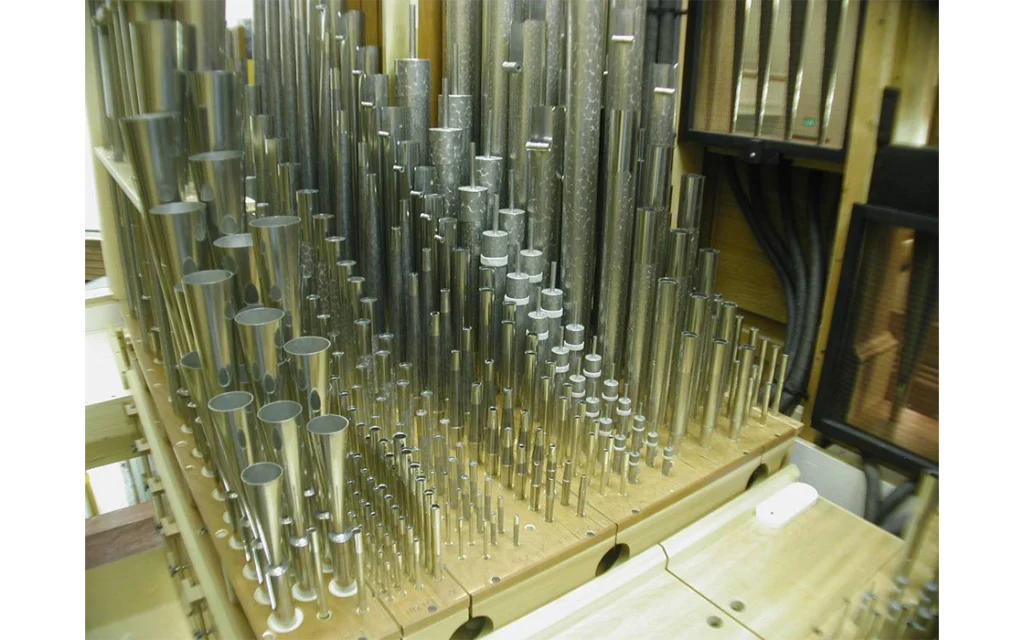
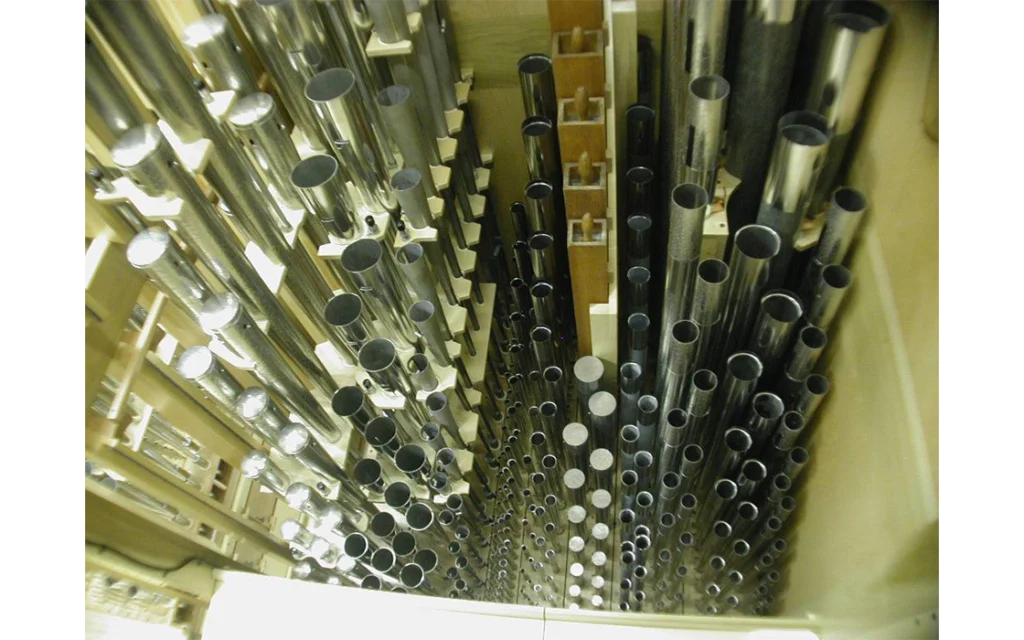
This two manual and pedal pipe organ incorporates 1840 pipes across 31 ranks. The organ required over 12,000 hours to design, build, install and tonal finish.
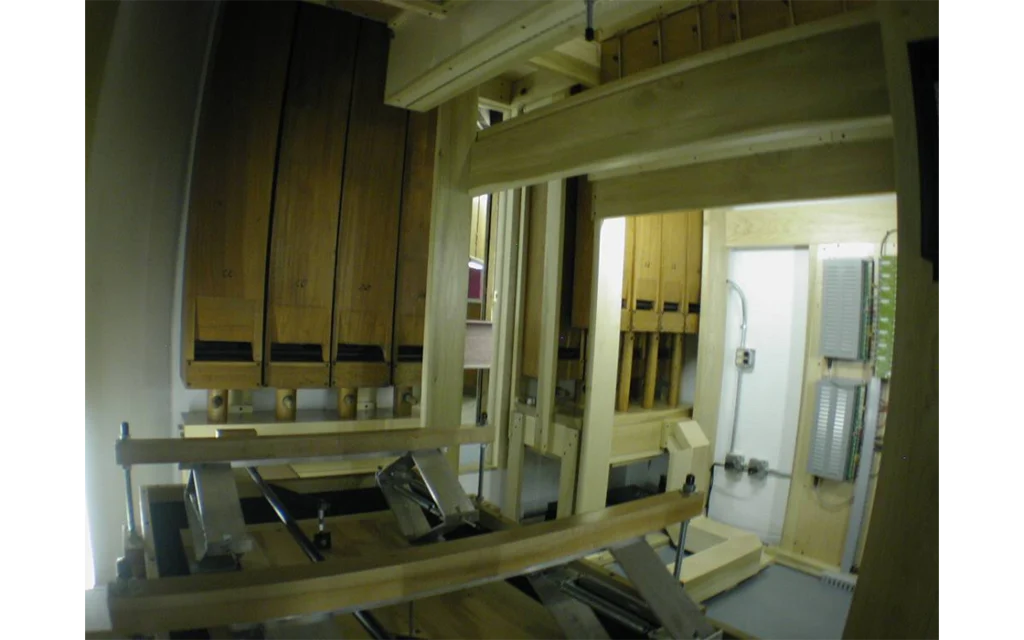
The heart of the organ is its windchests. This is the mechanism on which the pipes are planted and which controls the proper flow of air to each individual pipe. In this organ, 1562 pipes are placed on ‘slider and tone channel’ windchests. This is the same style used in the highest quality mechanical (tracker) action organs and was chosen for its low long-term maintenance cost as well as for the superior manner in which the air is delivered to the pipework. They are built of the highest quality cherry and other hardwoods. The remaining pipes play from electro-pneumatic style windchests. Both operate from 12-volt DC signals from the detached console.
One of the interesting features of this organ is the humidification system that is custom designed for pipe organs. This system is installed in the blower room and is configured to circulate humidified air throughout the organ’s internal wind conduit system whenever the organ is not being operated. This ensures the stability and longevity of the many wooden components.
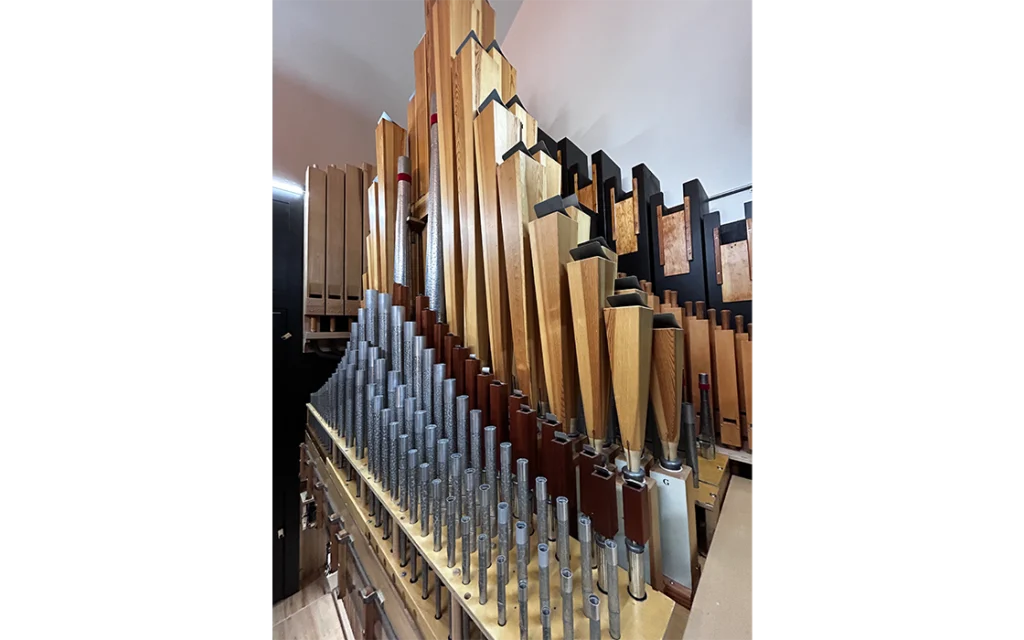
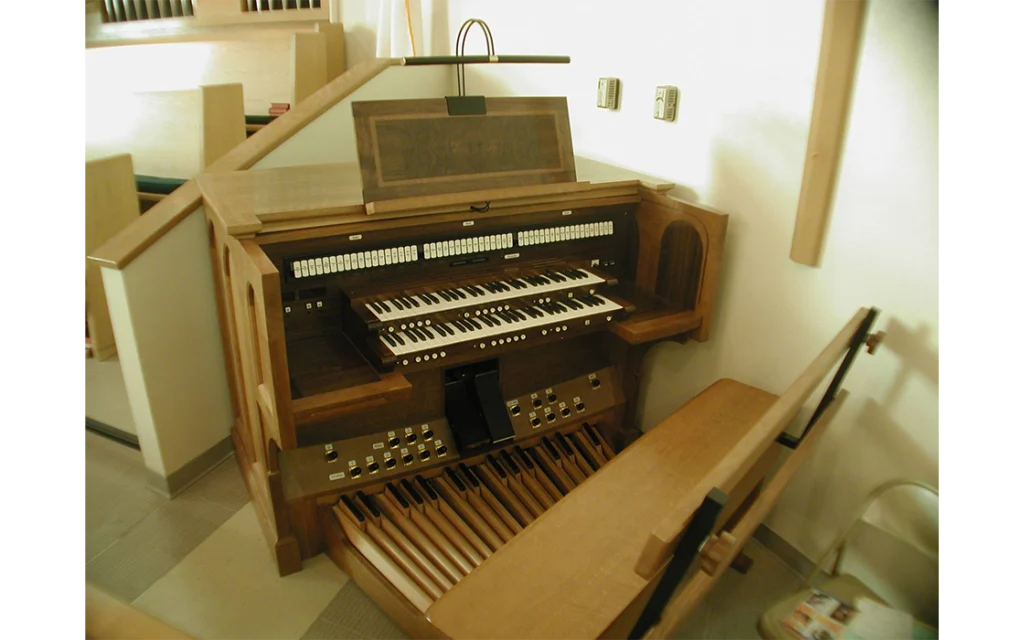
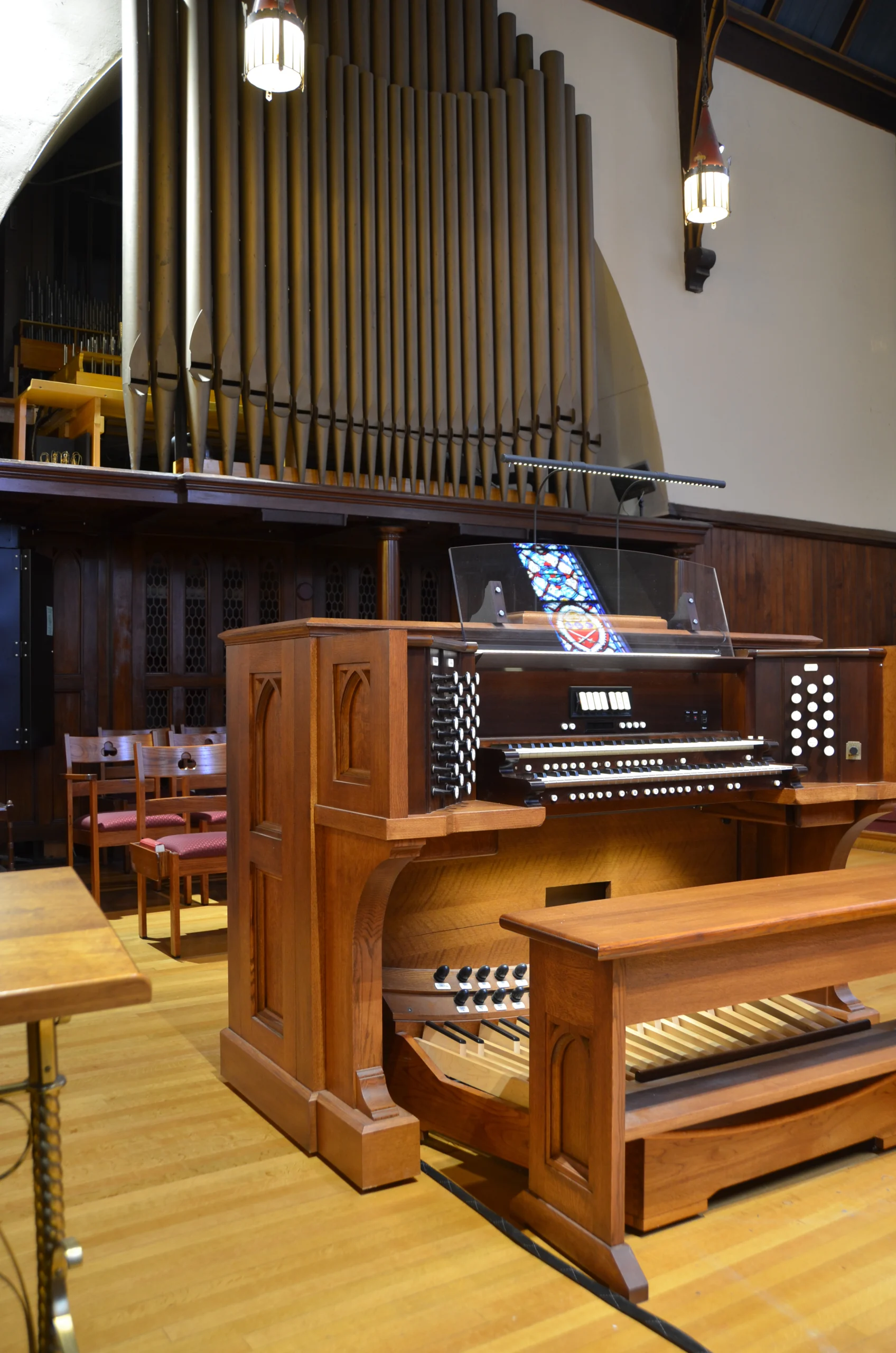
The structural framing, swell enclosure and unit windchests are constructed of poplar. The wooden pipes are made of clear pine to provide a warm, rich tone. The metal pipes are made of various compositions of lead, tin and, in some cases, are of zinc. The swell enclosure is 2” thick to ensure the maximum dynamic range possible. The new console is made of oak and oak veneers, finished to match the façade, and includes an adjustable bench and music rack.
Because the organ has a solid-state interface, we were able to provide a number of special features including: transposer, 99 level piston system memory and a sequencer. The latter can record every electrical function of the organ and is able to play back all aspects of a performance including changes in keys, pistons, stops and swell shades. This feature is most useful when the organist needs to set up and evaluate registrations. By recording and then playing back a piece of music, the organist is able to move about the room and verify that the organ is tonally balanced as a solo instrument or for accompaniment of the choir, congregation or soloist.
Ultimately, the success of any pipe organ is judged by its sound. From the initial scaling of the pipework to the note-by-note process of on-site tonal finishing, each rank of pipes is given roughly 40 hours of attention. All aspects of pipe speech are meticulously set including: the onset of speech, volume, decay, tone color and harmonic development. This is what ensures the eclecticism of sound required to effectively render the wide variety of music written for the organ over the last three hundred years. A large percentage of the pipework speaks at 16’, 8’ and 4’ pitches. This provides the warmth, tonal variety and power necessary to accompany the Baptist worship liturgy.