Project 15
Zion Evangelical Lutheran Church
Cobleskill, New York
2000
1912 Möller
24 Ranks – 2 Manuals & Pedal
Electric Slider Action
Remanufactured
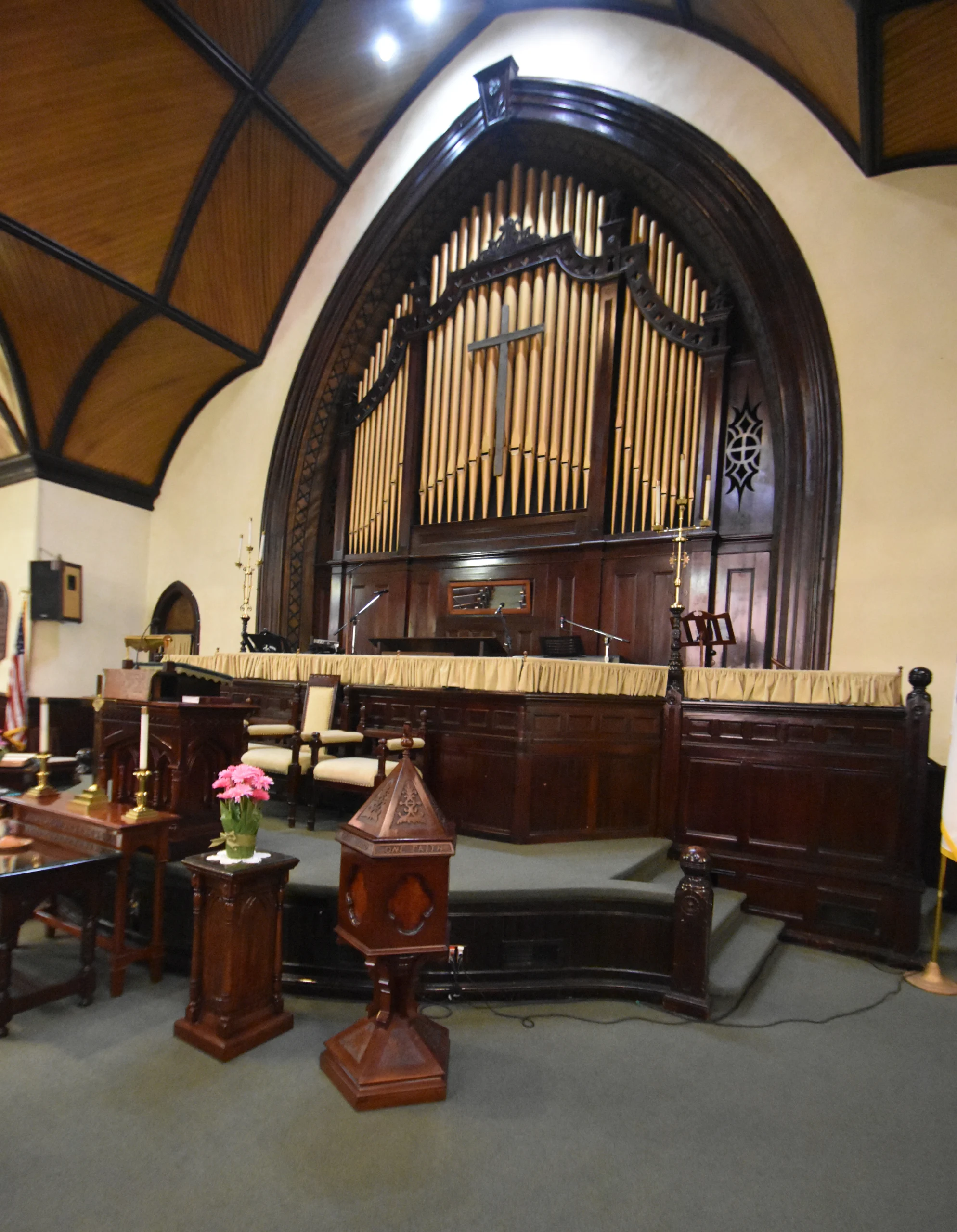
*Sadly, on November 7, 2020 an electrical fire broke out in the choir area at the right front of the sanctuary and burned through the floor, destroying two rooms below. The fire burned especially hot, and the organ in the front chamber behind the fire area, sustained extreme heat and water damage. While the organ (or at least some interior chamber parts) were perhaps recoverable, it was declared a total loss. As of September 2021, the building is currently abandoned.
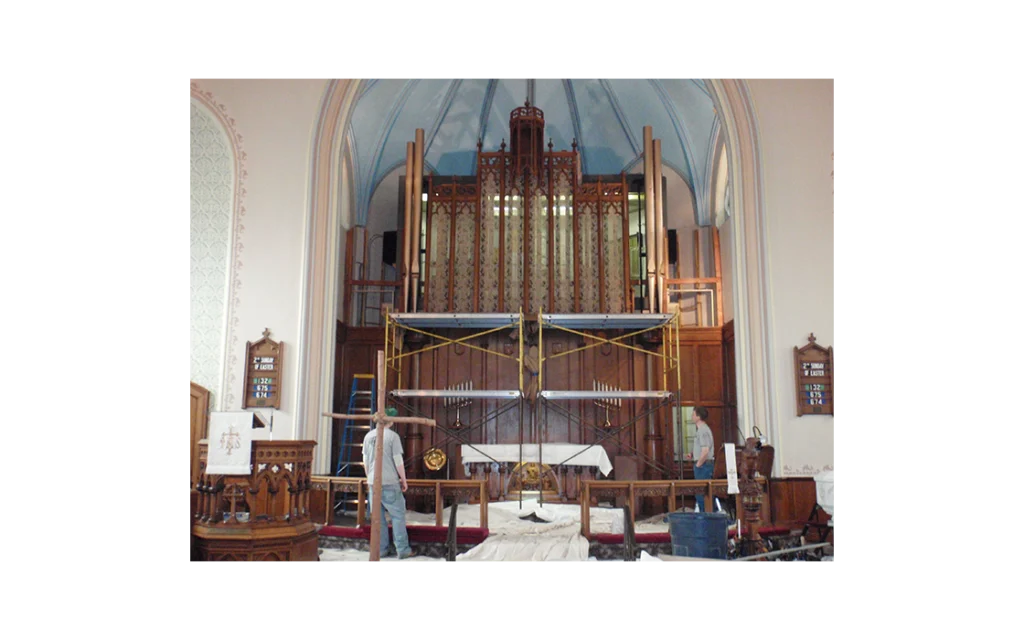
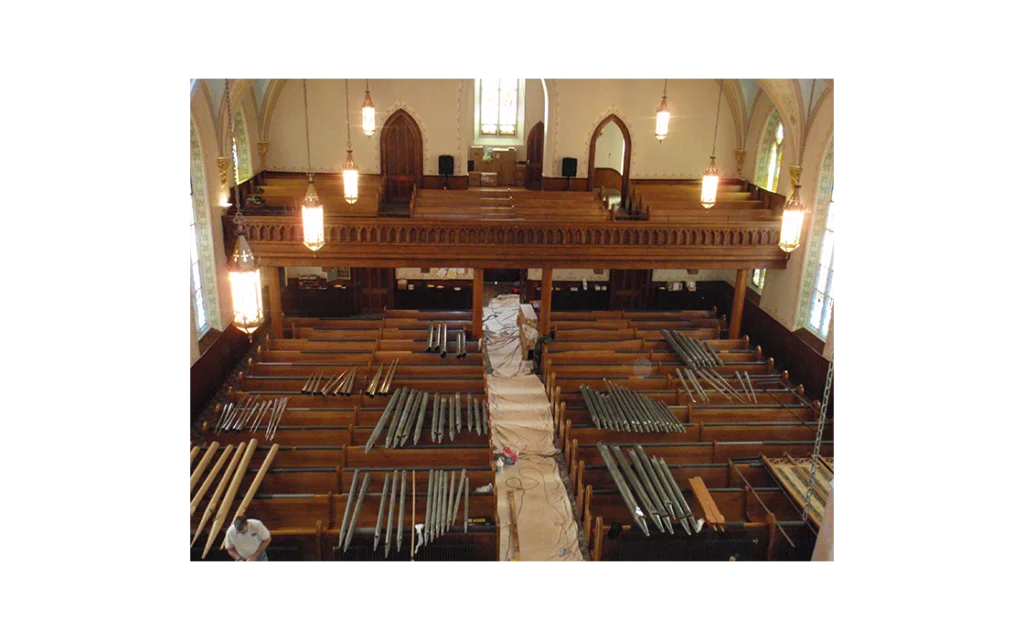
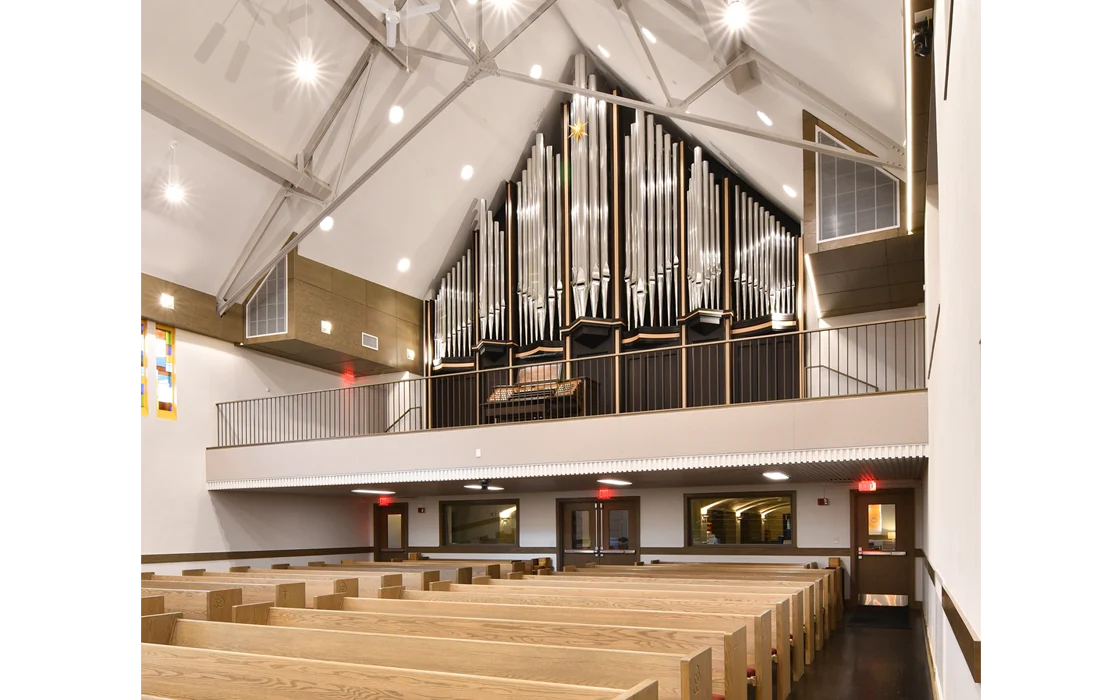
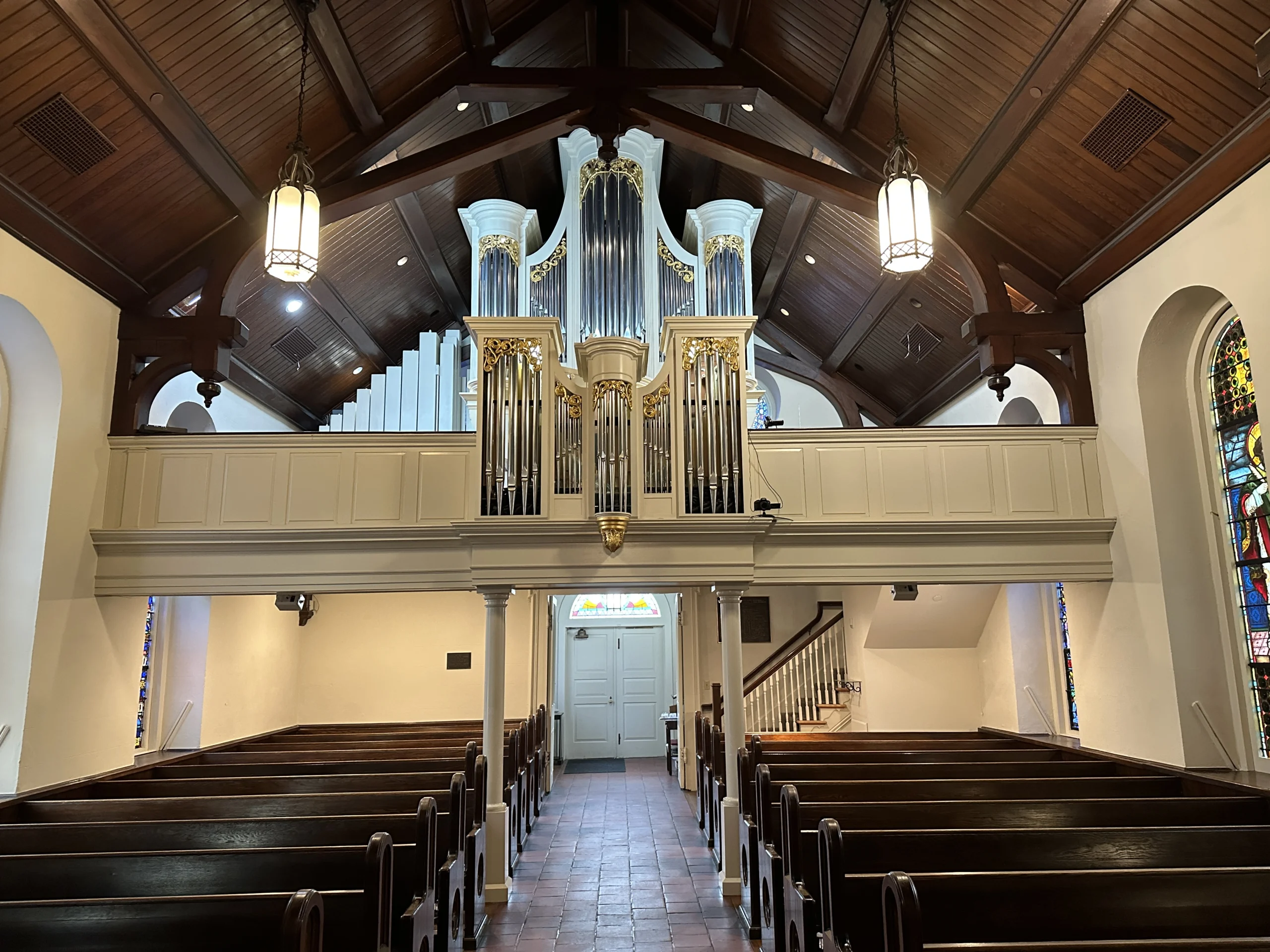
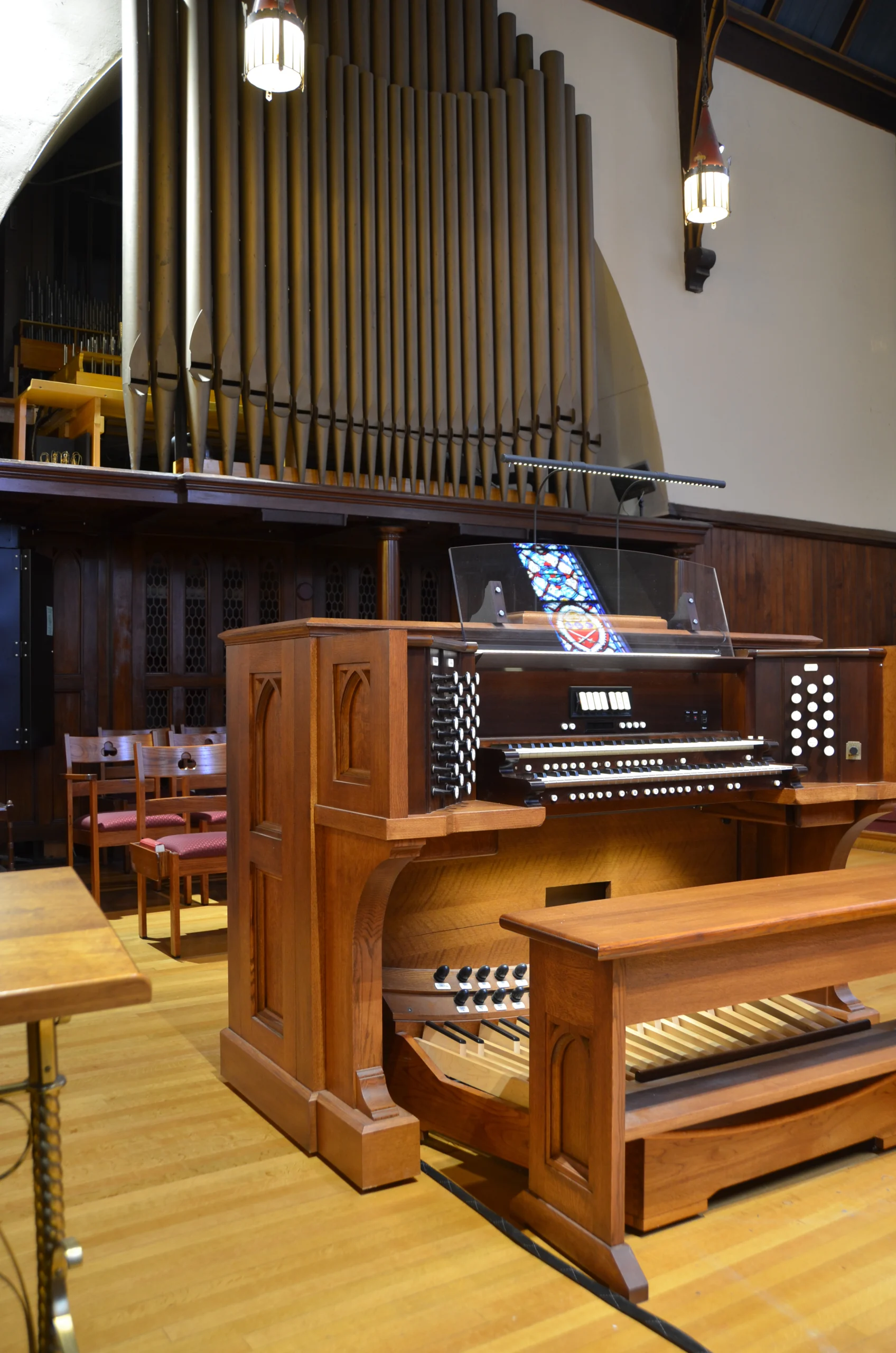
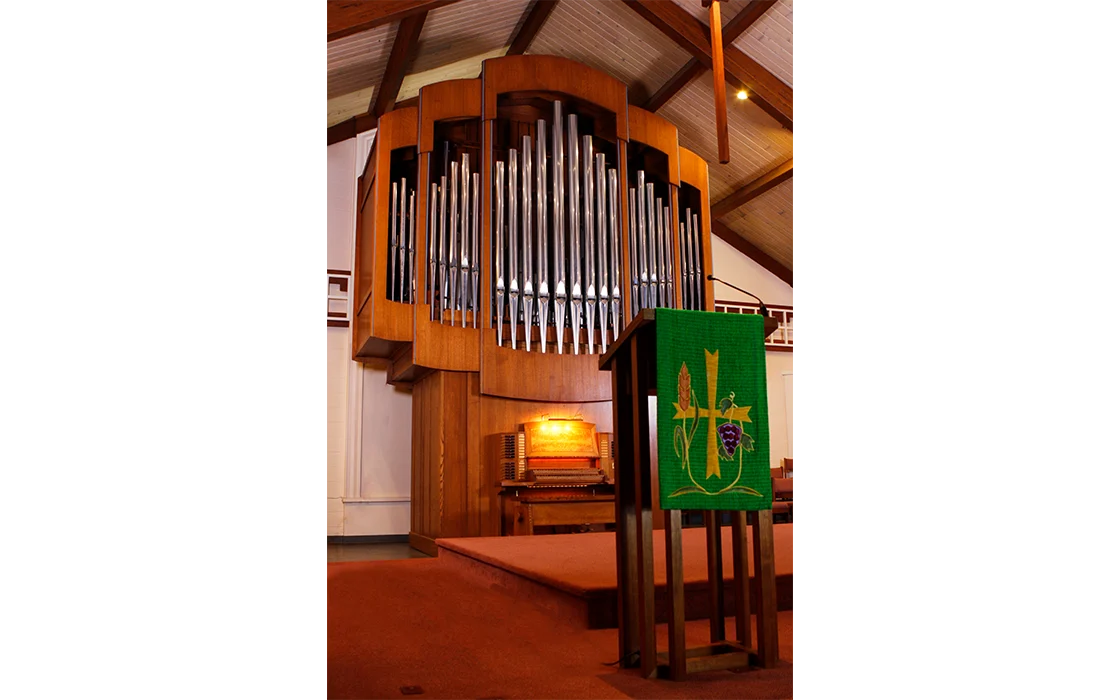
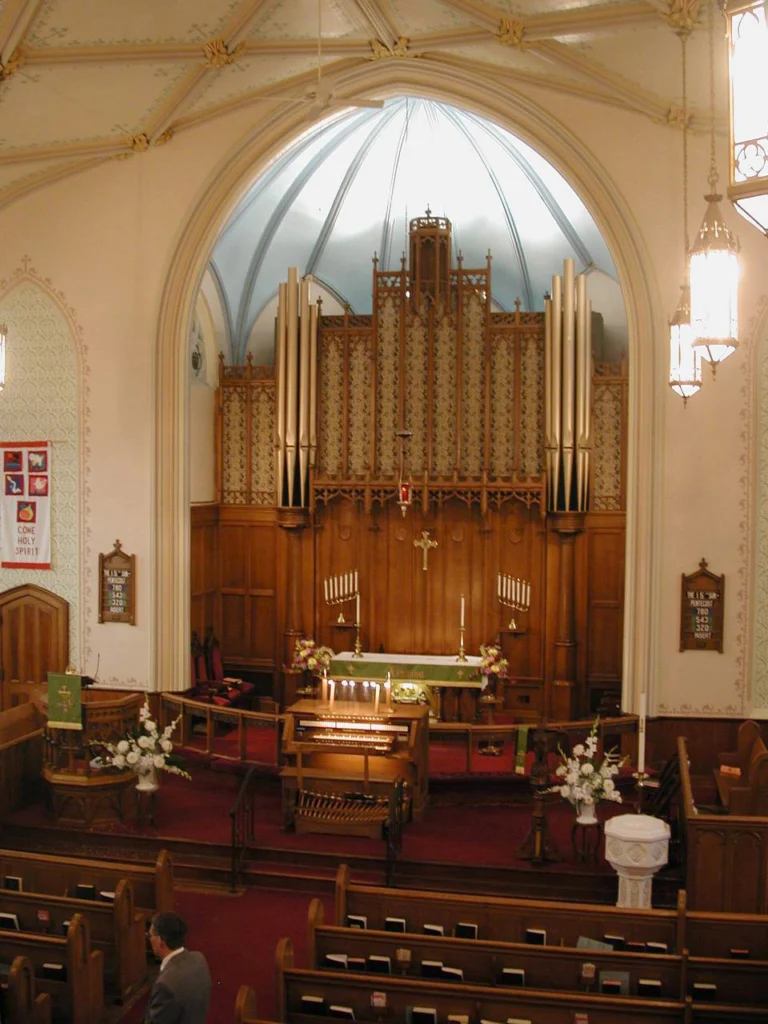
The design and scope of this project has, from the onset, been influenced by the desire of the church to create an instrument that would first, meet the worship requirements of the congregation and second, be enjoyed by the entire community through concert use. Many options were considered ranging from minimal repairs of the aging and ailing organ to an all-new instrument. Over time, the project developed into the “remanufactured” instrument you see today. The existing 1912 Möller tubular pneumatic organ was designed with one division stacked above the other. In our redesign, we chose to place the majority of pipework on one level to minimize heat stratification and stabilize tuning. Along with this we addressed the antiquated wind chest and tonal design. While the instrument was being remanufactured, the chancel support structure and chamber walls were redesigned and reworked to accommodate the new organ. Finally, the acoustical fabric was replaced to allow full tonal egress.
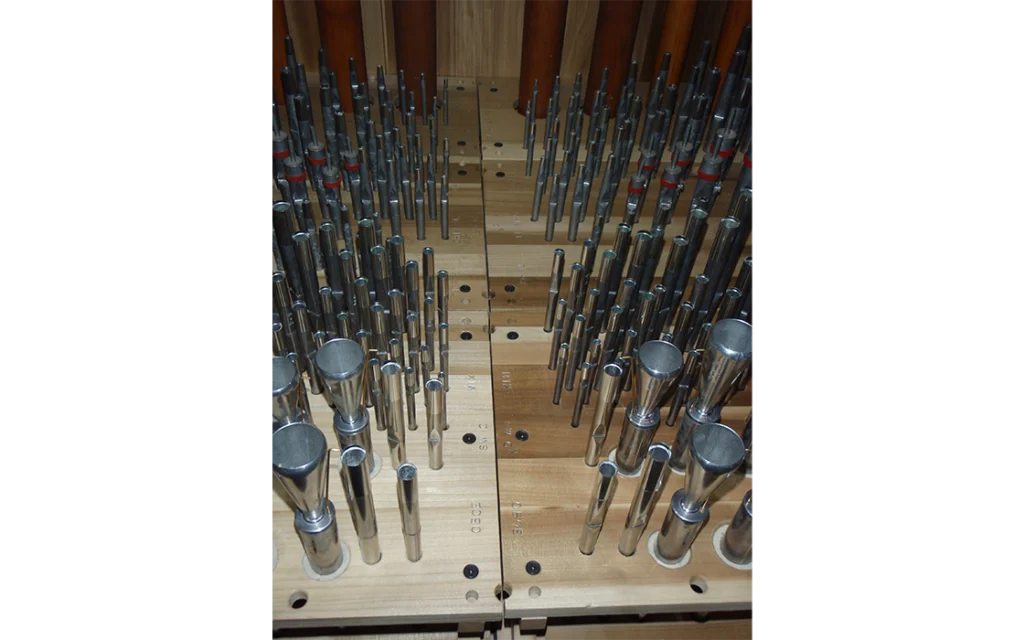
Currently, the Great division is located to the left of the Swell, both with independent expression enclosures. Pedal division pipes are found flanking the Swell and Great enclosures as well as within and under the enclosures (in the case of the large bass pipes). The divisional wind chests were replaced with slider and tone channel chests which are operated by 12 volt DC actuators. The Pedal offset chests are electro-pneumatic action. The winding system was completely redesigned to provide stable and independent regulation to the Swell, Great and Pedal pipes.
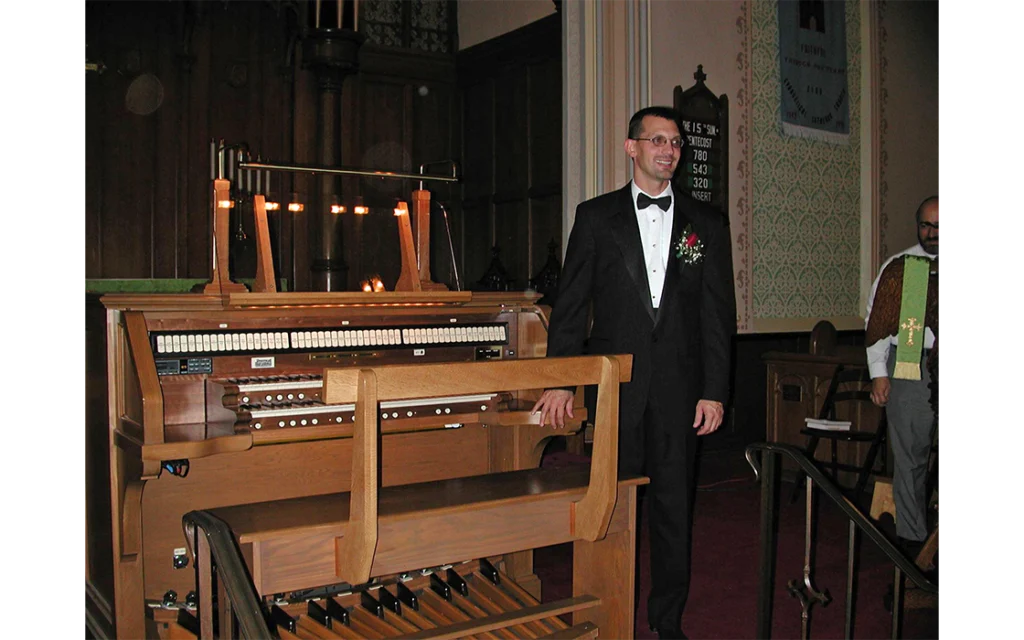
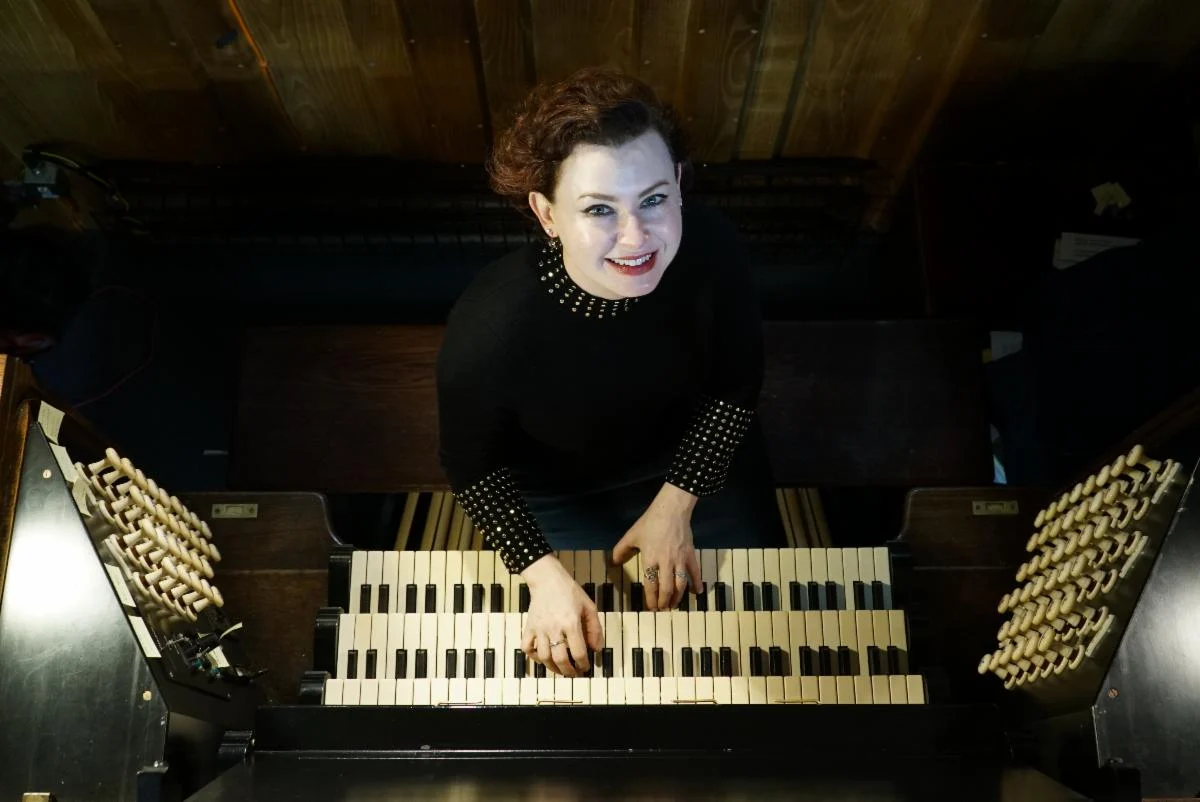
The detached and movable console contains new keyboards. It also incorporates a state-of-the-art solid-state controller which utilizes 99 levels of preset system memory, a sequencer for recording and playing back the organ, a transposer and Midi voices. The two manual and pedal instrument required 5050 hours to design and build. There are 1430 pipes in the organ across 24 ranks. The majority of metal pipes are constructed of various compositions of lead and tin with the larger pipes being composed of zinc. The wooden pipes are of clear sugar pine. Careful consideration was given to the individual pipe voicing to create a blend between the old and new sounds. The result is an instrument, warm and singing in character, yet possessing power which defies its modest size.
The new pipe organ for Cobleskill Zion Lutheran Church is one that combines the tradition of high quality organbuilding, the versatility of new technology and the best components from the previous instrument. It is, in its own way, a work of art that we are proud to have been a part of. For us, organbuilding is a labor of love that enables us, in some way, to express ourselves.