Our Process:
a walkthrough a New Project
Collaboration
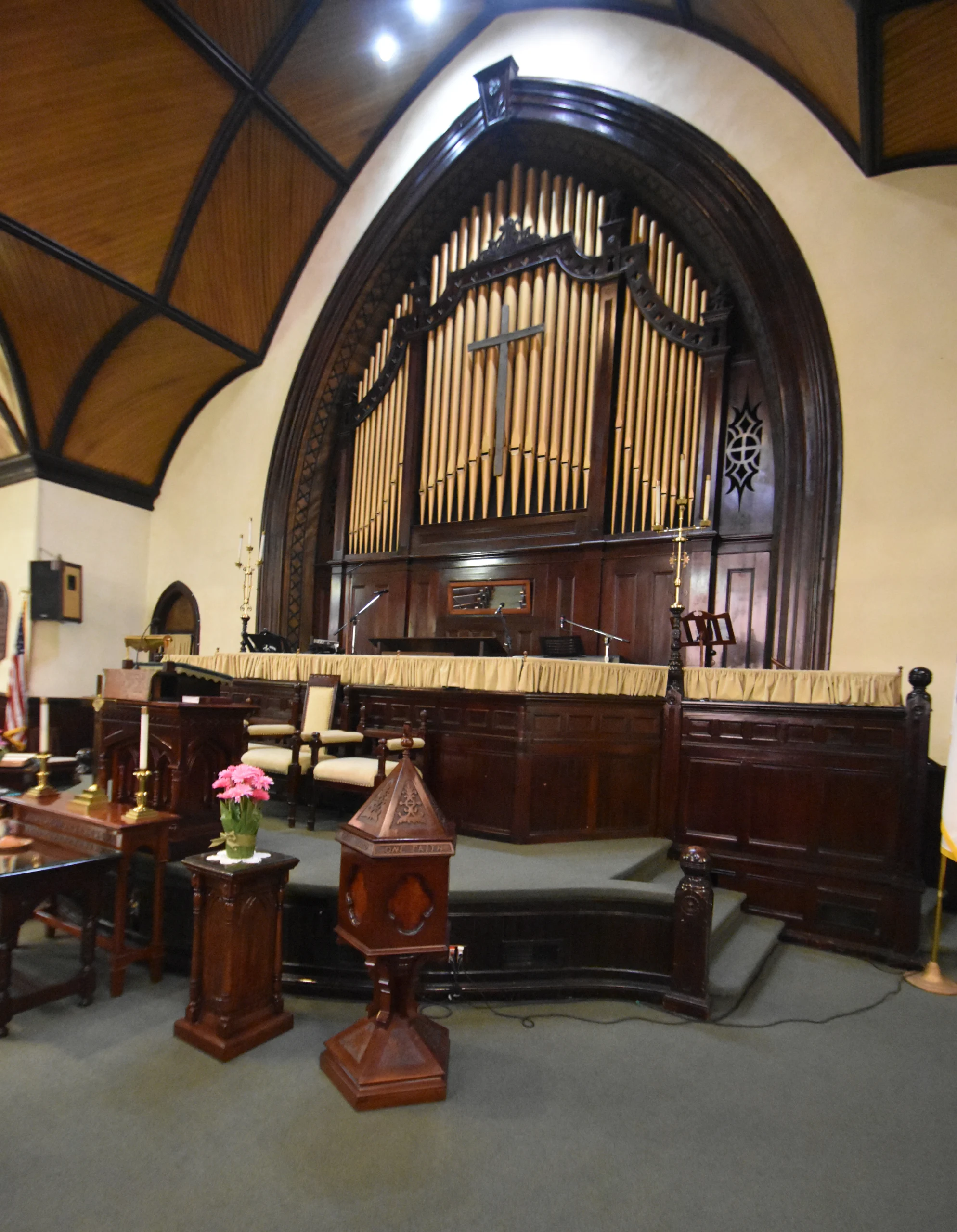
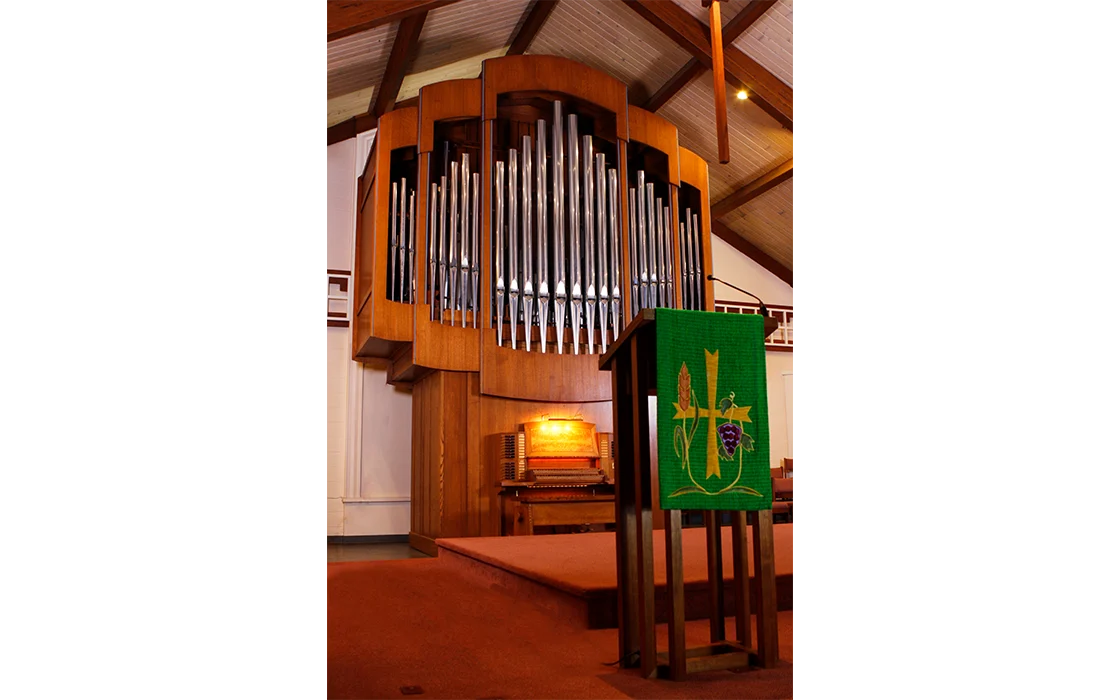
Ensuring the success of any organ project requires that we give priority to what our clients convey to us about their unique situation in terms of music program and expectations regarding the organ as a solo instrument. These in turn must be aligned with space limitations and unique acoustic properties and, of course, budget. Like many of our colleagues, we bring our own artistic vision to the table; that said, taking a collaborative approach by first developing a clear understanding of what our clients want to achieve, puts us in the best position to ensure successful outcomes.
We purposely offer a diverse set of skills in the construction of all styles of organ actions to ensure that it is the needs of the client that drive the project and not the imposition of any limited capabilities of our workshop.
Recommendations & Agreement
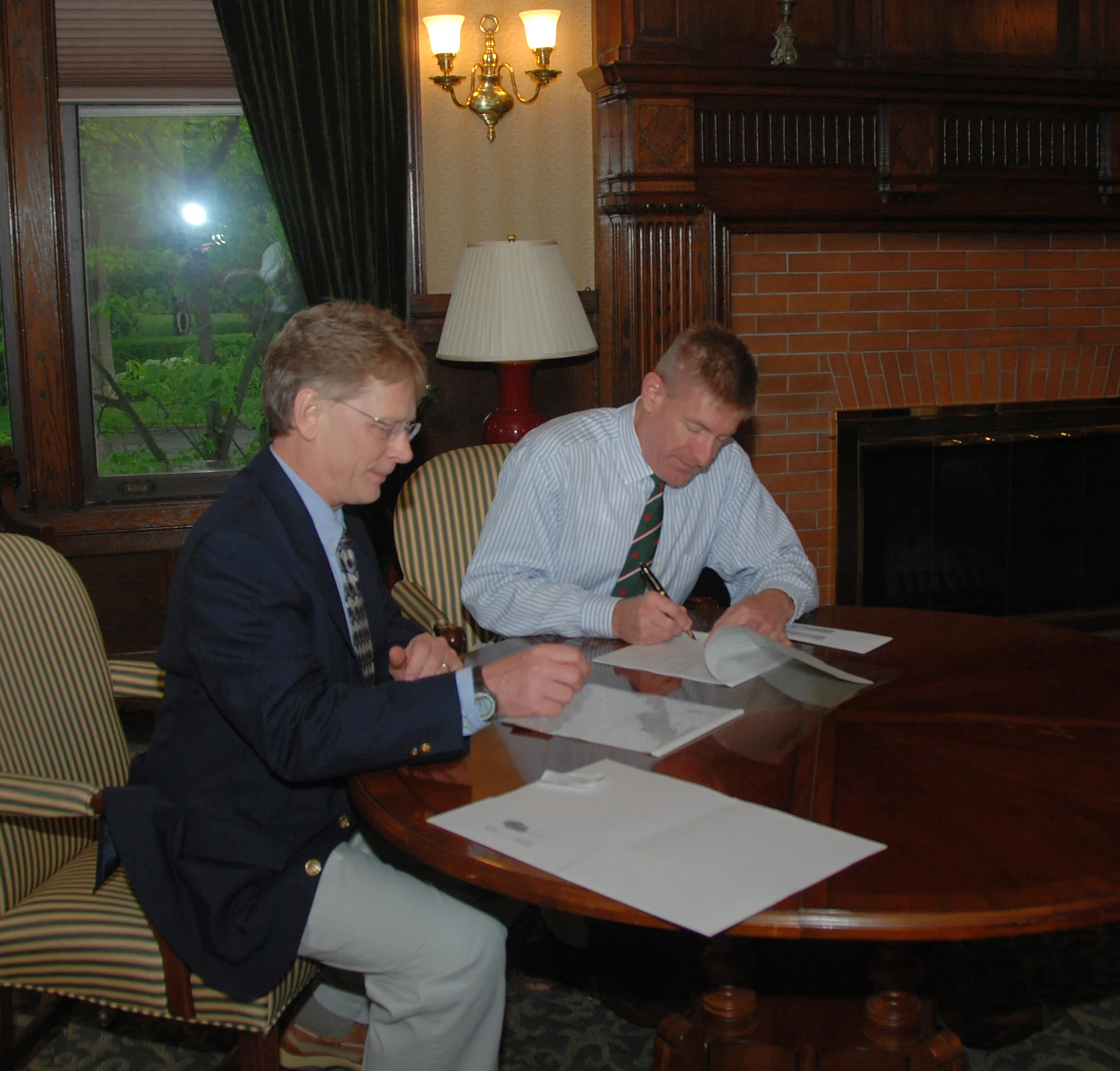
When a prospective client invites us to collaborate on a project and to ultimately submit a proposal, there are several items to consider during our initial conversations.
Design
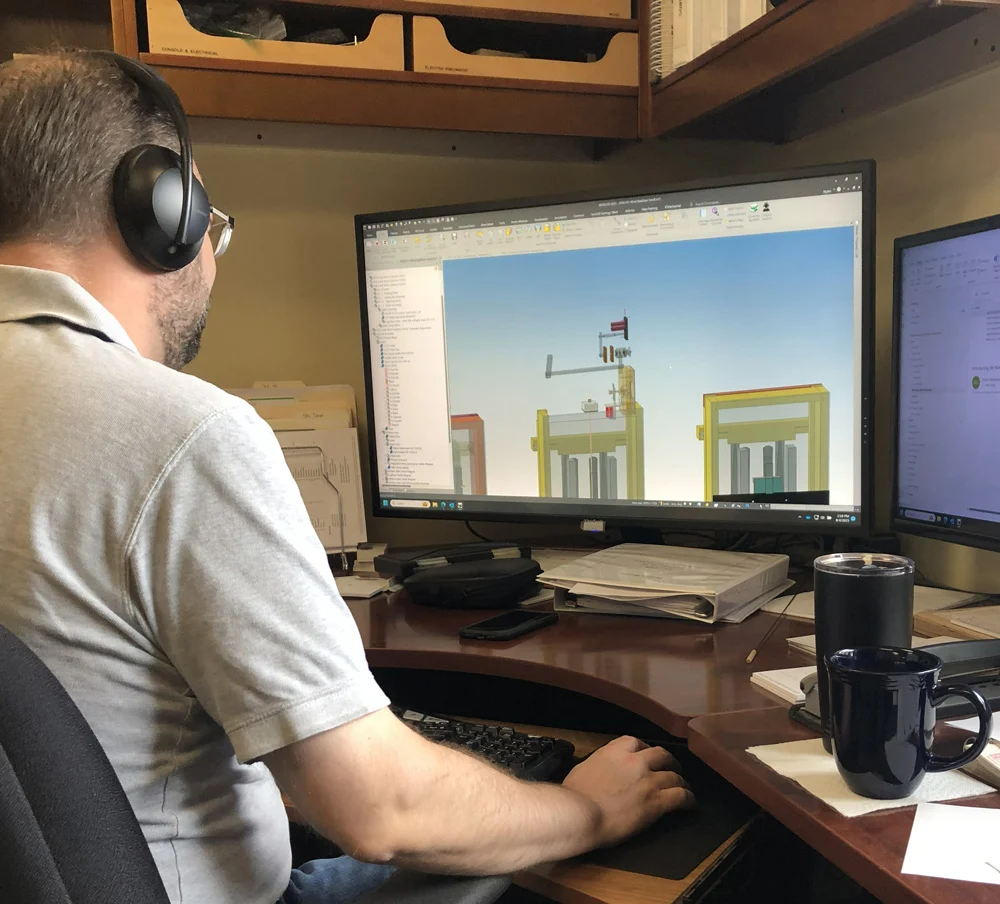
Once an Agreement is official, our design team begins work on visual, structural and mechanical aspects of the instrument. Here, Form follows function is more than a cliché. The design process is multifaceted and must include the placement of each rank of pipes relative to the others, the wind system, expression, air circulation and structure. Our Tonal director, Duane Prill, is actively engaged with the entire design team to balance pipe locations with wind pressures and division placement.
Parsons has used three-dimensional computer graphics since Opus 3 in 1987 to enable clients to fully envision the proposed organ in the room environment. Equally important, this incredible tool allows our team to build an instrument of any size to the nearest millimeter with complete accuracy, knowing that the essential interrelationships of each organ component are perfectly melded.
Essential in the design process is defining the needs to be addressed by the church in preparation for the organ. This may include acoustic considerations, air circulation, engineering data for structural/weight requirements and electrical preparations.
The Workshop
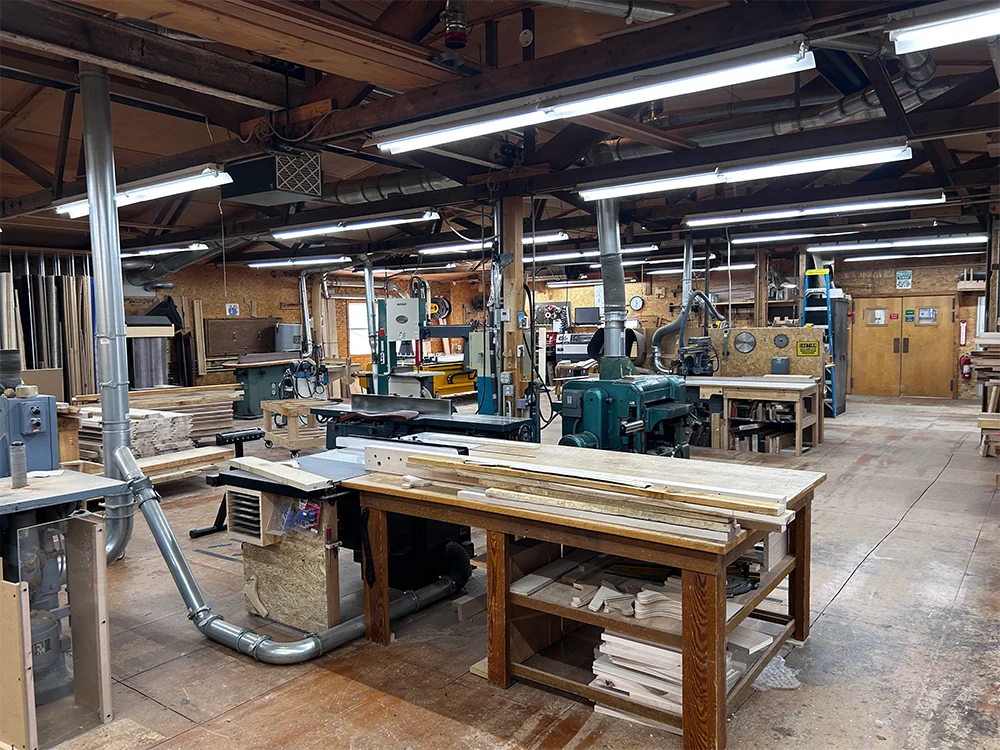
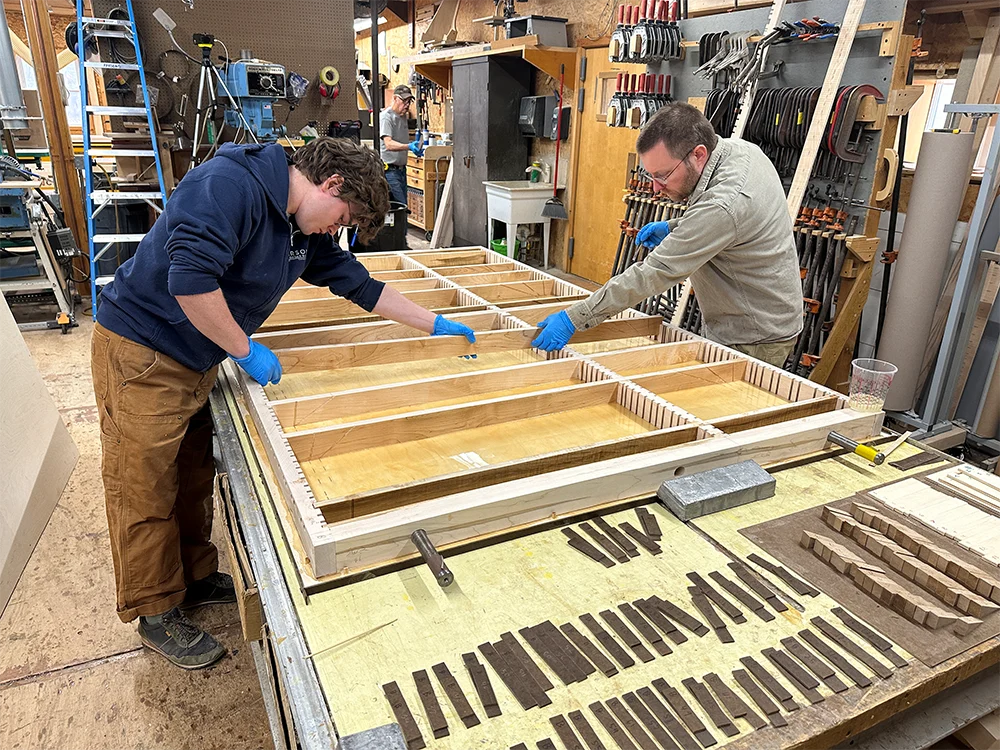
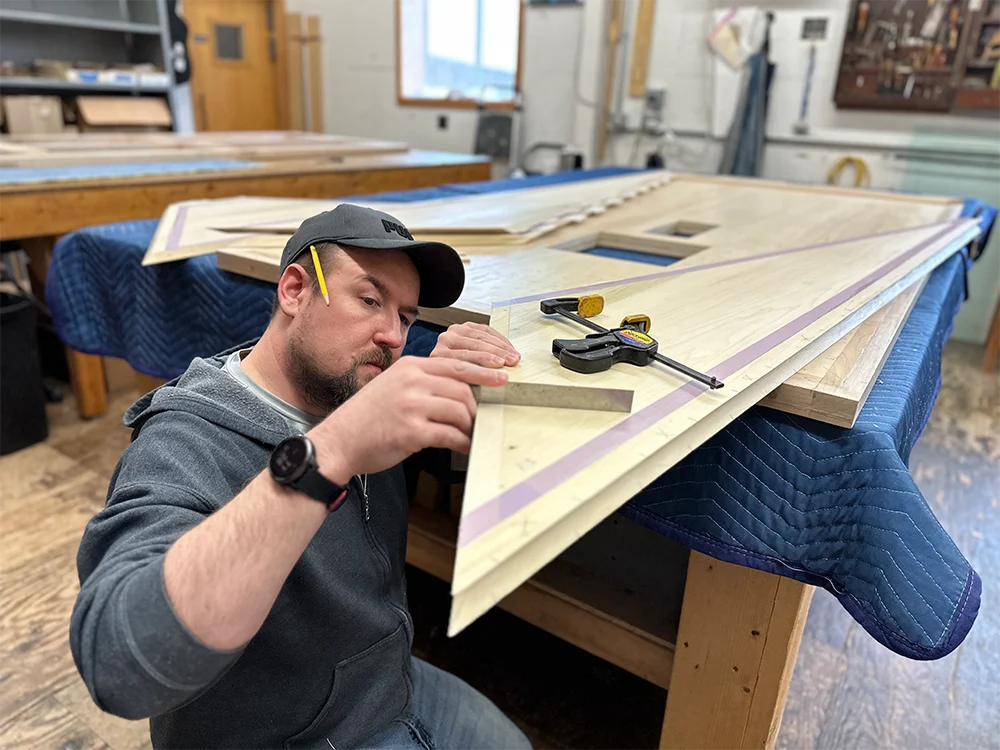
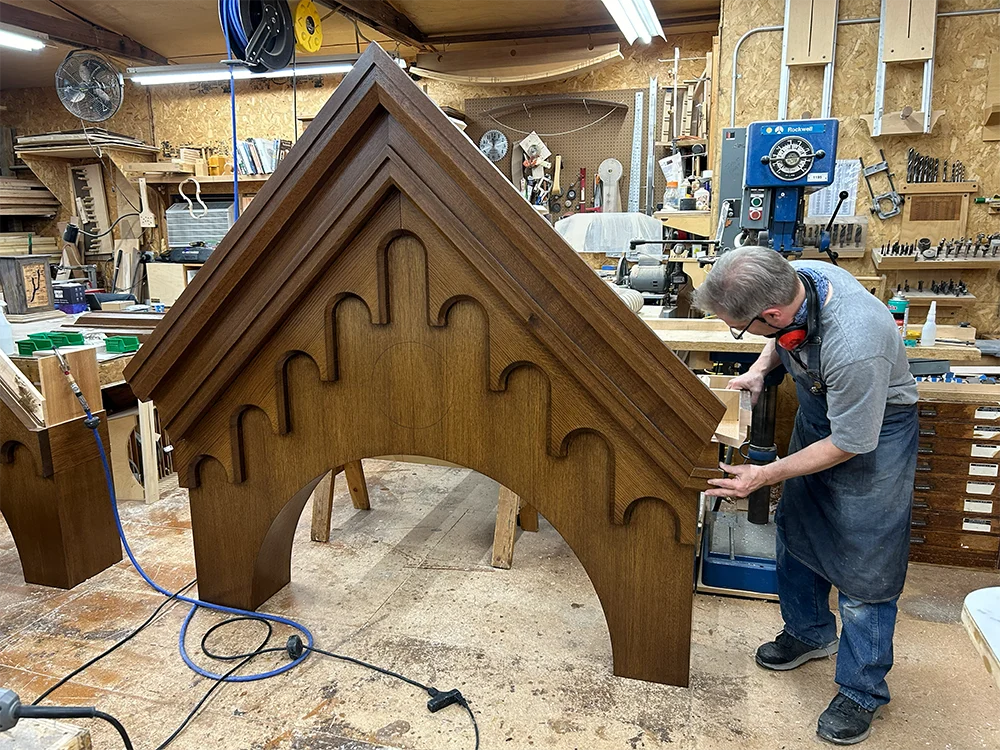
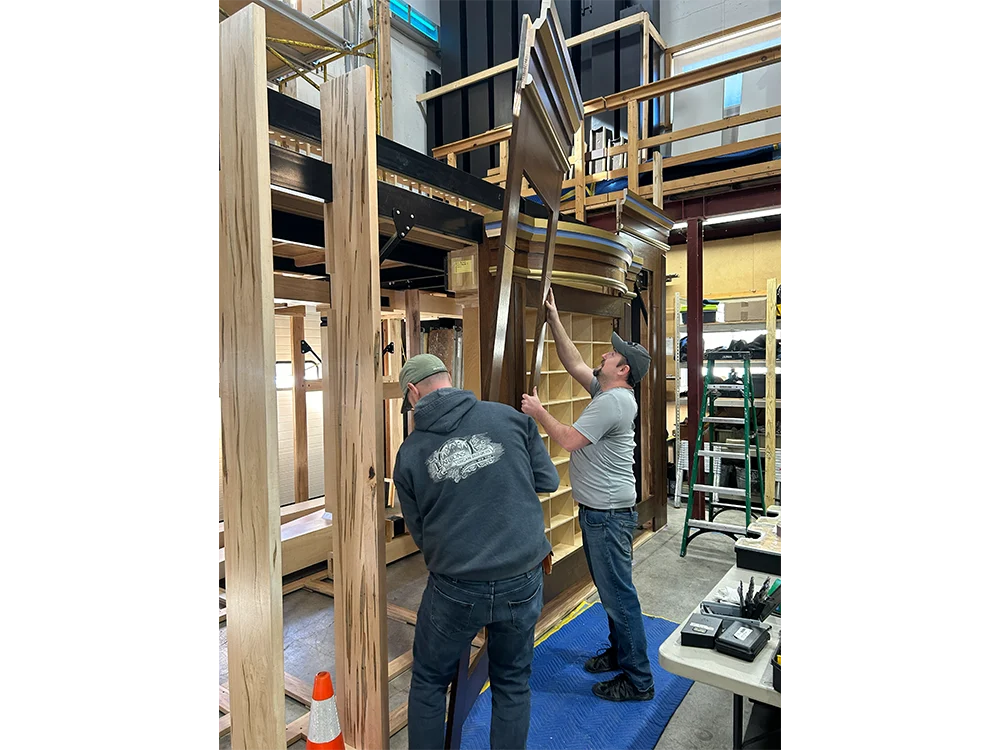
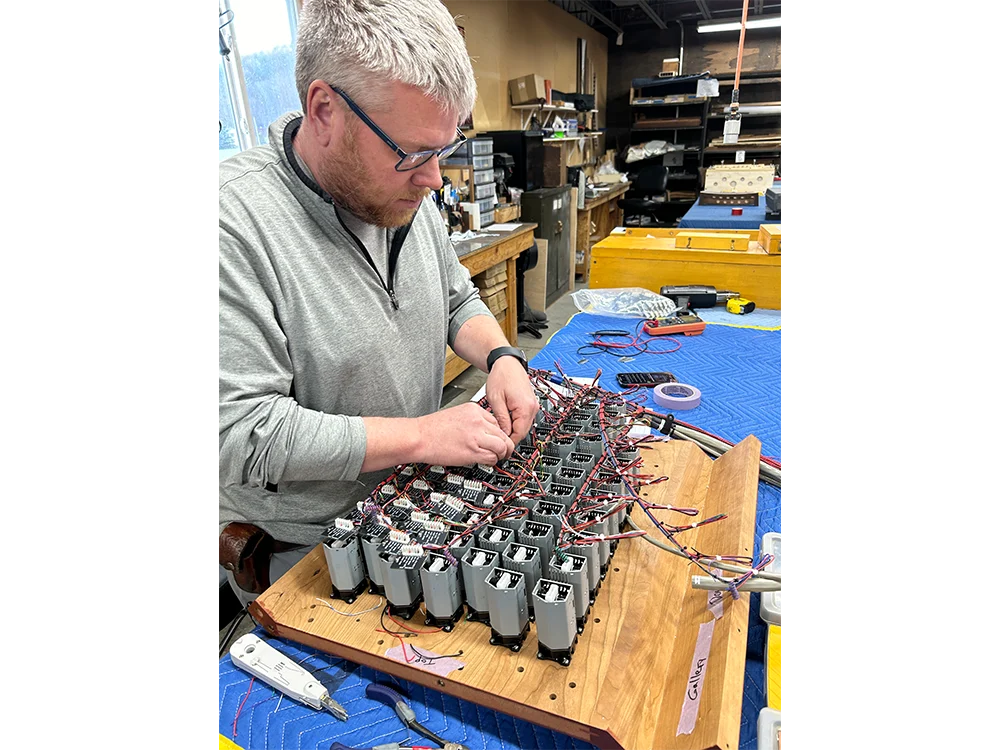
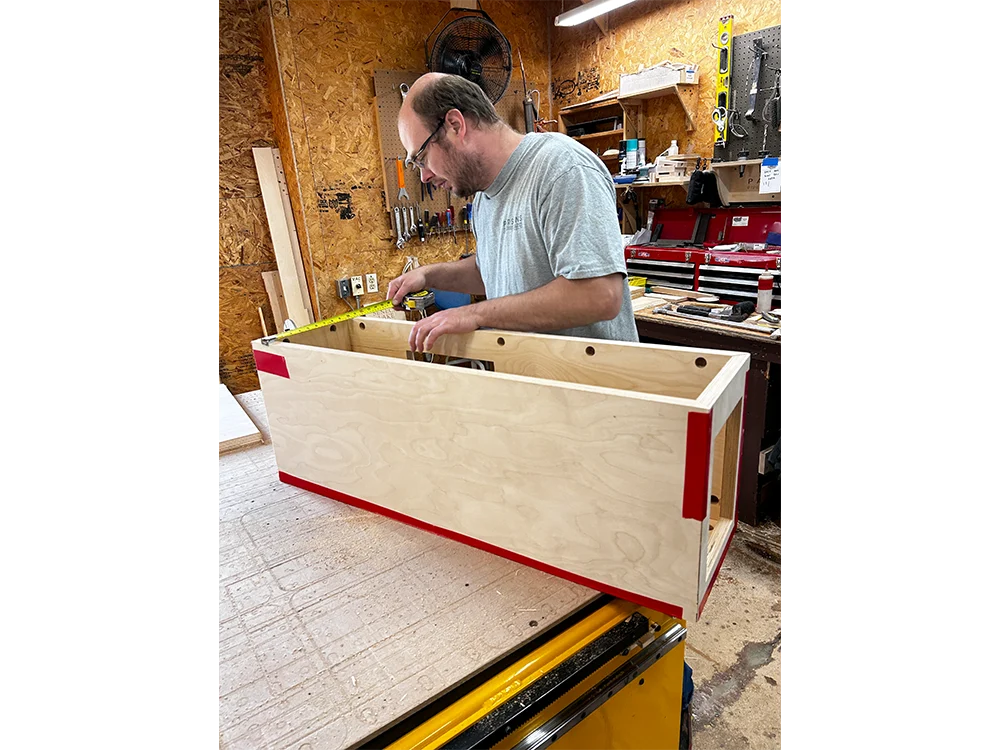
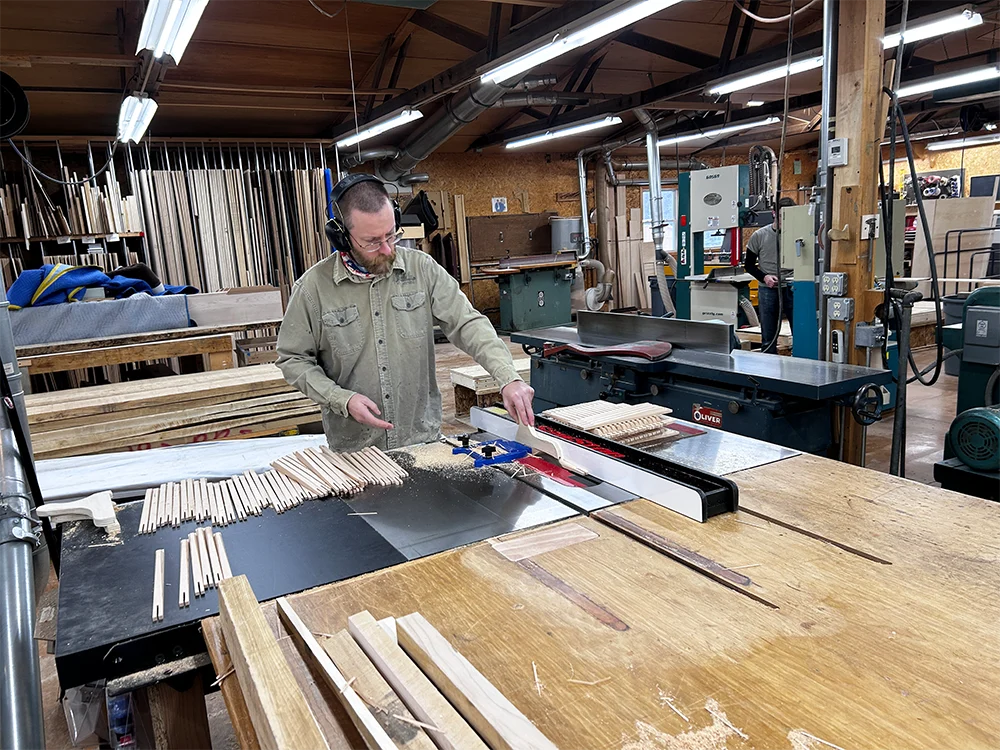
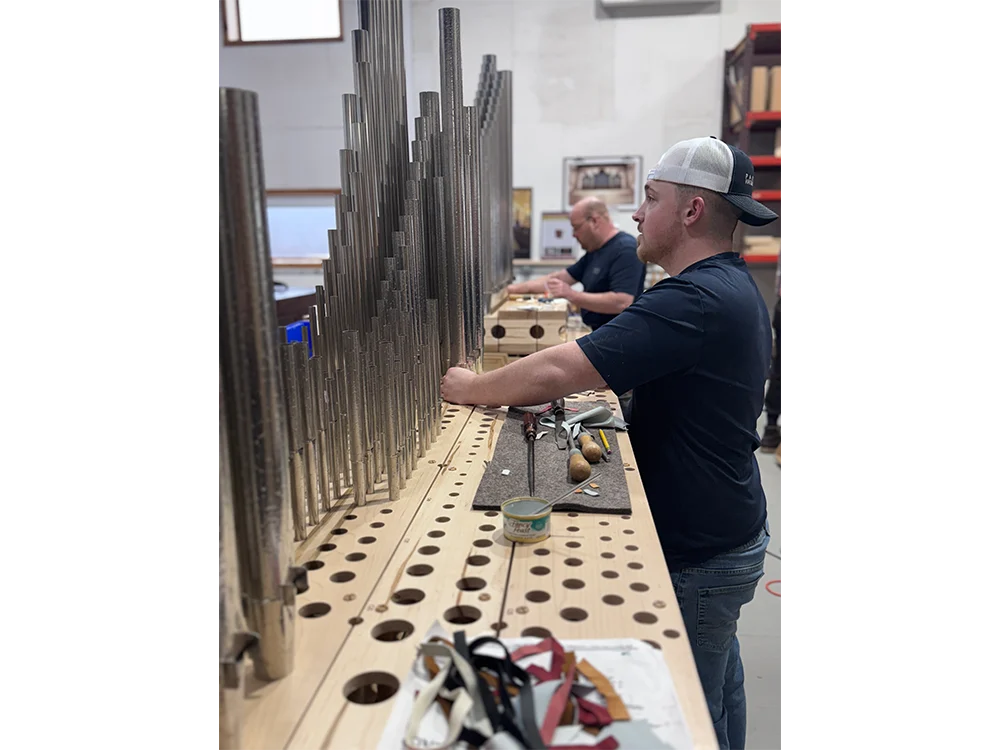
With the creation of design drawings, work begins in every department. Our 31,000 sq.ft workshop provides ample space for woodworking, assembly, finishing and storage necessary for efficiency.
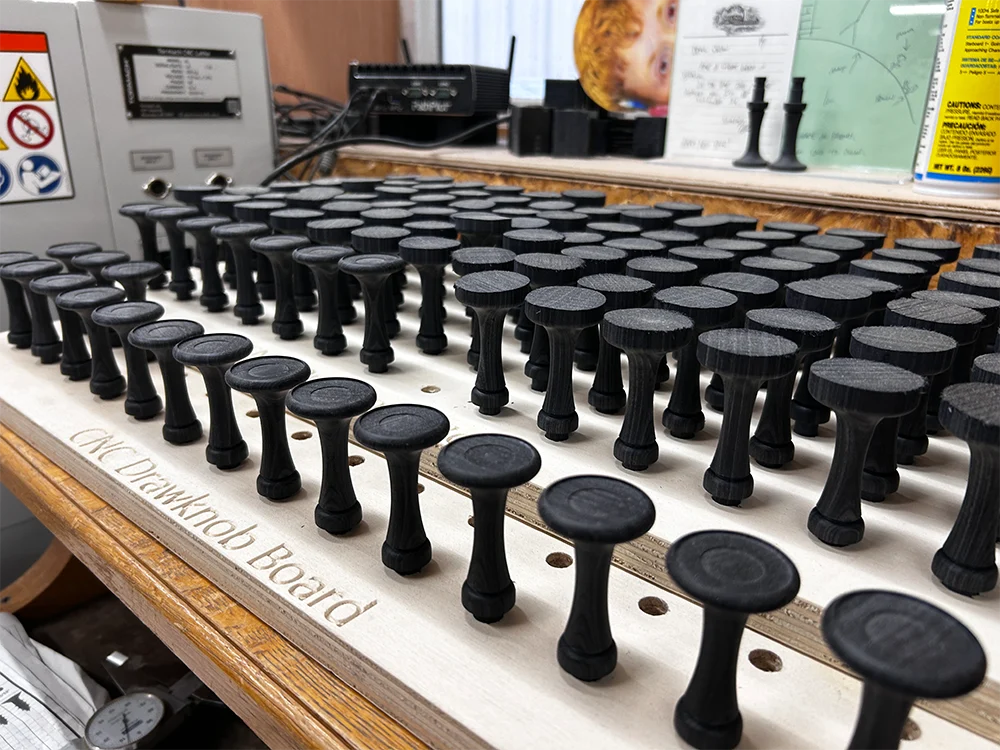
While many aspects of organbuilding must be completed by hand, our wood shop includes modern machinery to maximize accuracy and productivity. This includes our CNC router, CNC lathe, laser engraver and 3D printer.
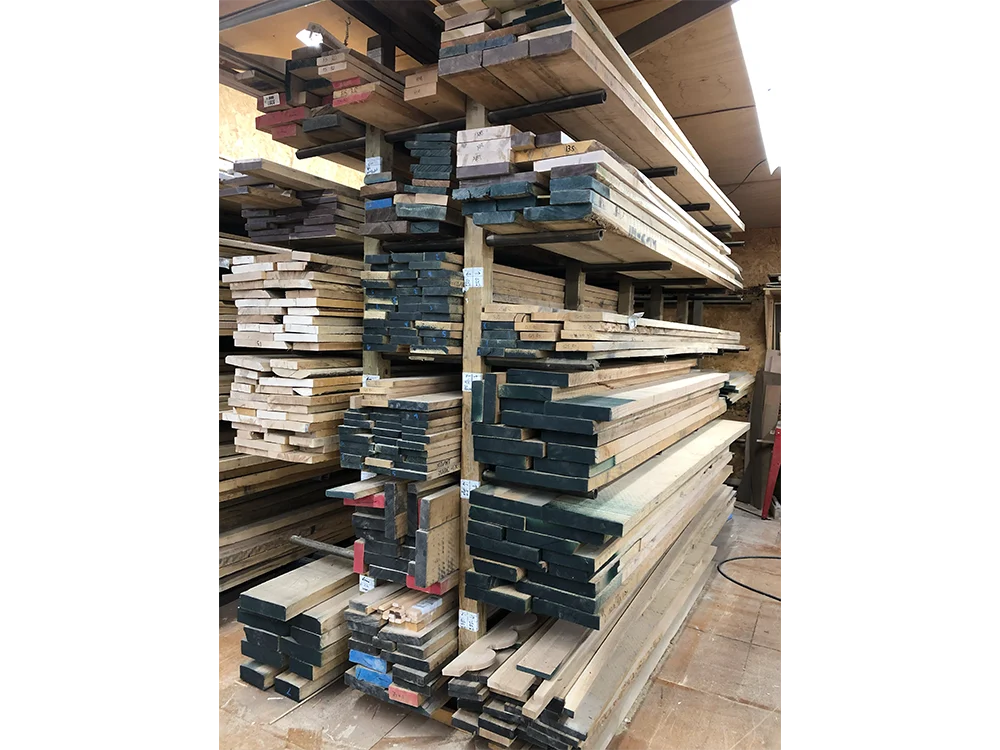
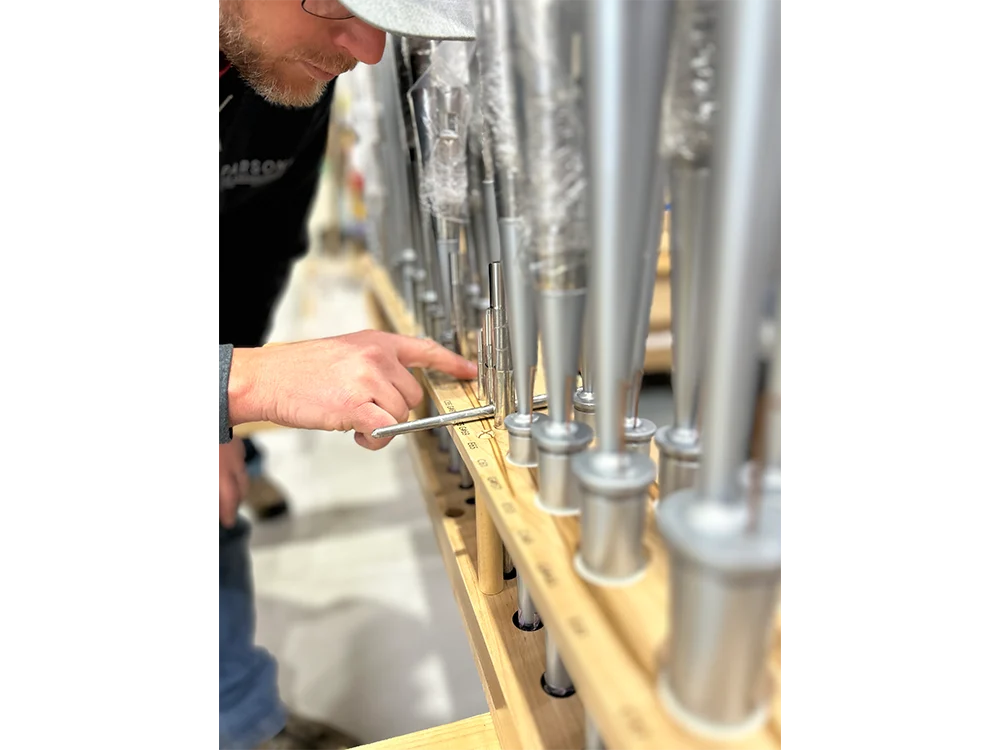
Understanding wood is key to instrument reliability. Wood pipes are made to exact specifications using material suited to the tone. Materials for pallets, stoppers, gaskets and windchests are precisely prepared and applied in the assembly department. Pre-voicing flue and reed pipes take place throughout the construction process.
Progress Inspections
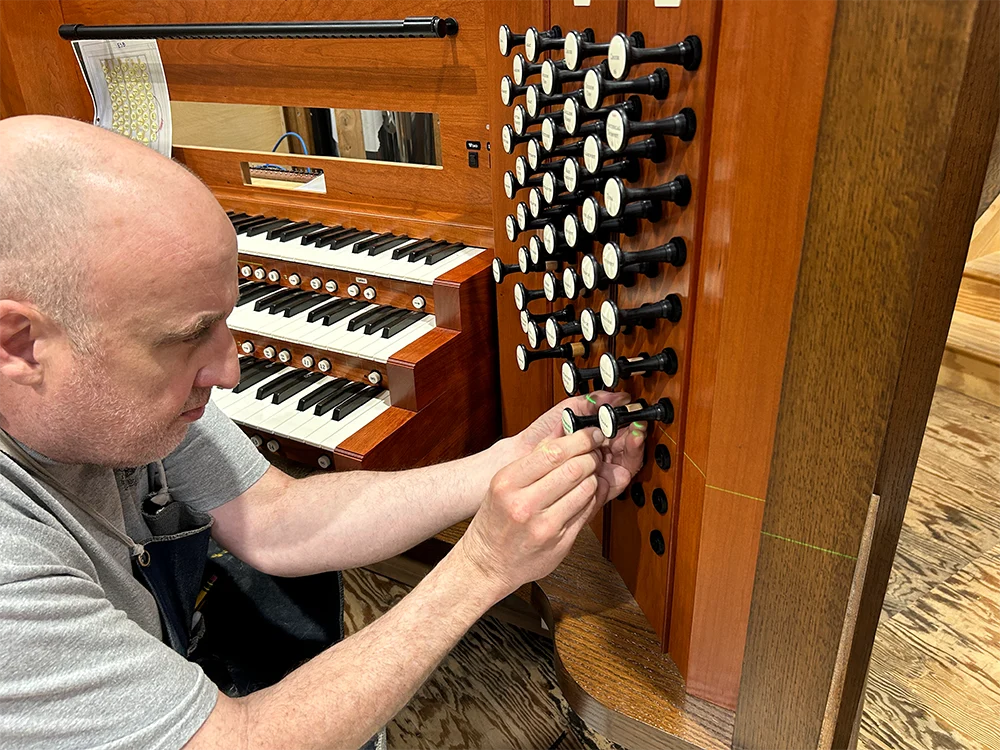
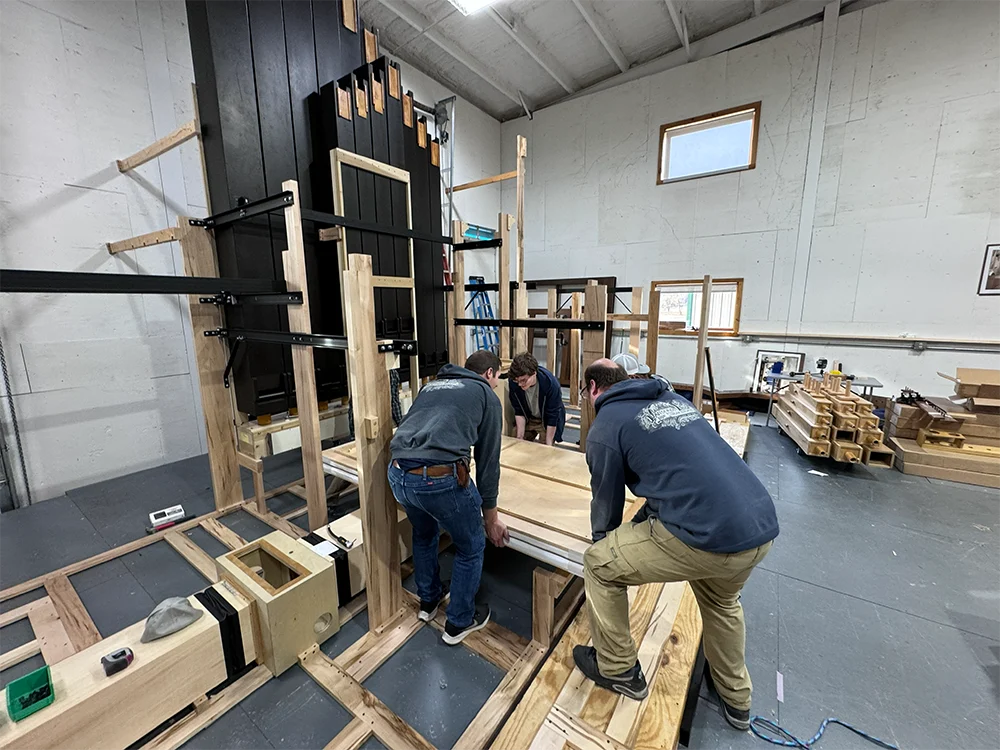
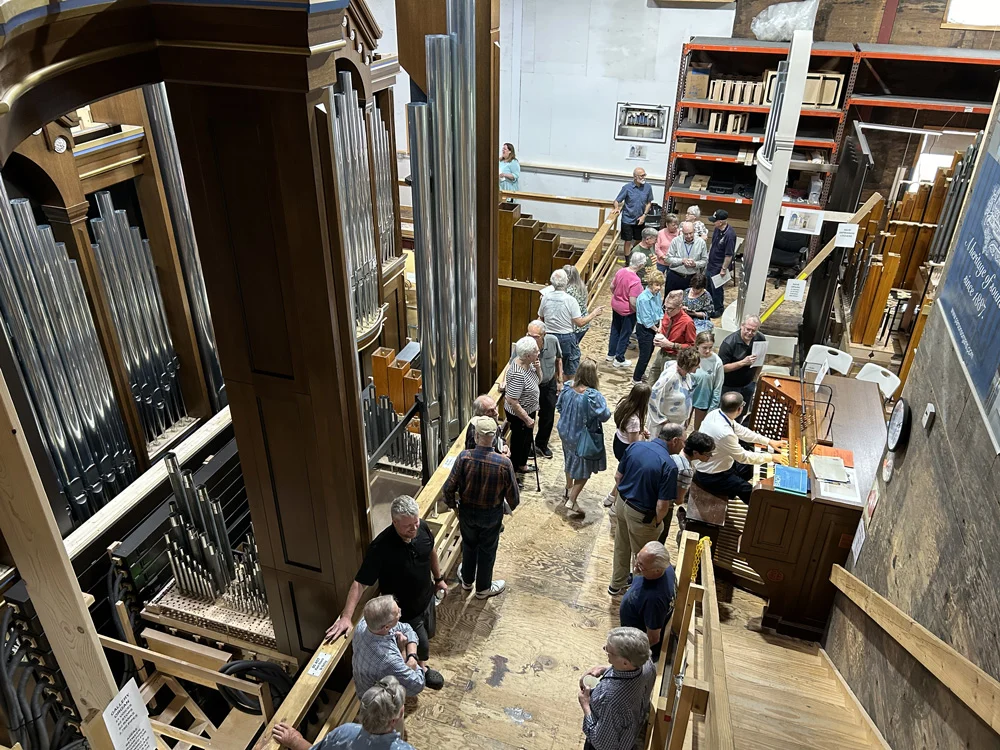
We encourage periodic client visits to build relationships and trust. All components ordered or manufactured are organized and clearly labelled. The organ is slowly assembled in our workshop to allow complete assembly, fitting of custom components and testing. This is essential for efficient installation with minimal disruption to client worship routine.
Once fully assembled we host an Open House for the client and for the community. This is a time of celebration where we encourage folks to tour our workshop, see how an organ is built and even play the organ.
Installation
Our crew disassembles the organ, packages and wraps all components for safe transportation and carefully loads the trucks for delivery. Our installation crew travel at the same time and are ready to unload when the trucks arrive, usually on a Monday morning.
The first task is preparing the church for the unloading. This includes protective covering for floors, furniture and pews. We encourage members of the congregation to help with this process and to participate in the unloading of the trucks. This provides people with a sense of ownership in this important addition to the church. There is a job for everyone, young and old.
The myriad of components are sorted as they are unloaded so that the puzzle can be viewed and reassembled. This typically requires use of the entire worship space and the relocation of services for at least one Sunday. Our crew, typically 12 technicians, work tirelessly to assemble the bulk of the structure and components so that routine worship services can resume as soon as possible. Once the bulk of components are assembled, organ subassemblies are completed and fully tested.
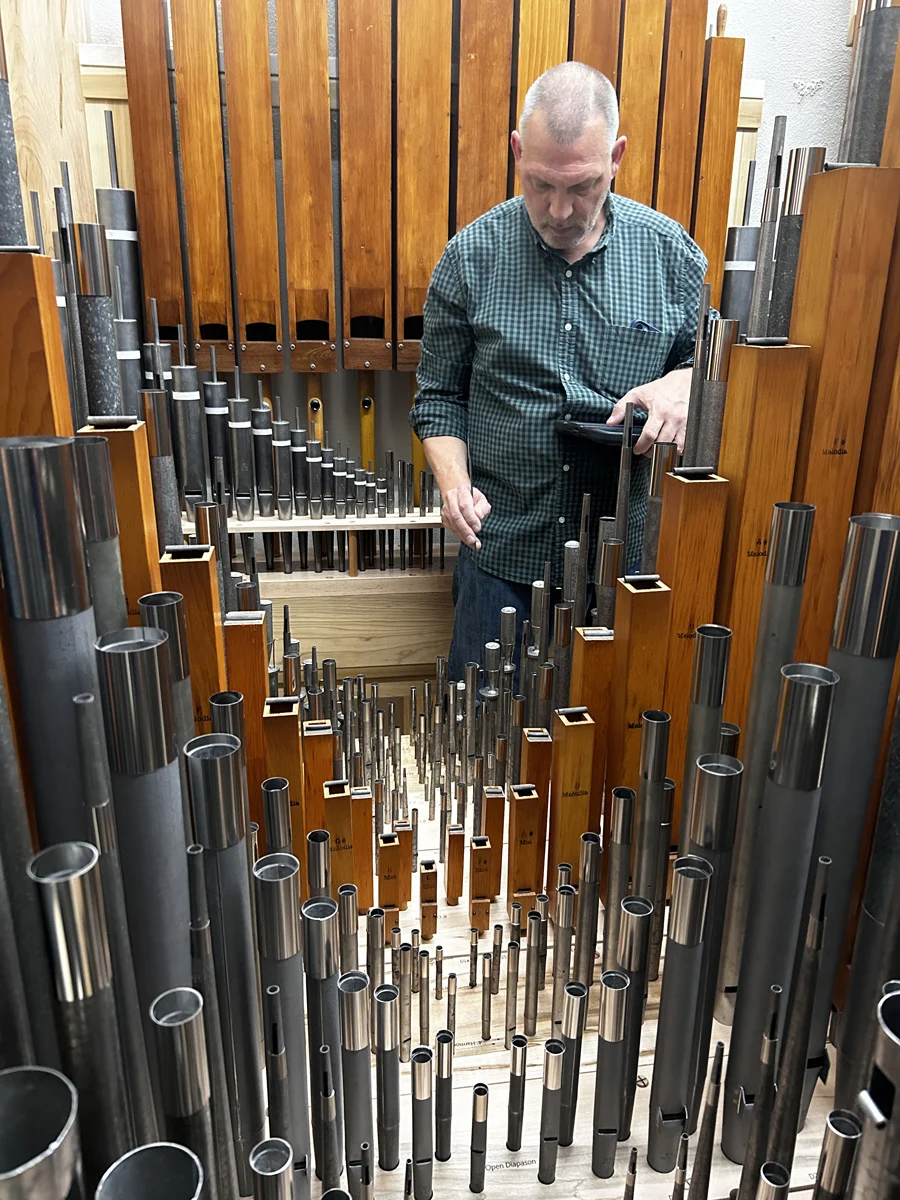
The final step in assembly is the meticulous process of installing, regulating and final voicing each individual pipe in the organ. This process established balances essential to both a fine accompaniment instrument and an exceptional solo instrument. Listening to the sounds from the console and from various parts of the nave is all part of providing a sound suited to the acoustic of the room.
Service of Dedication and Recital
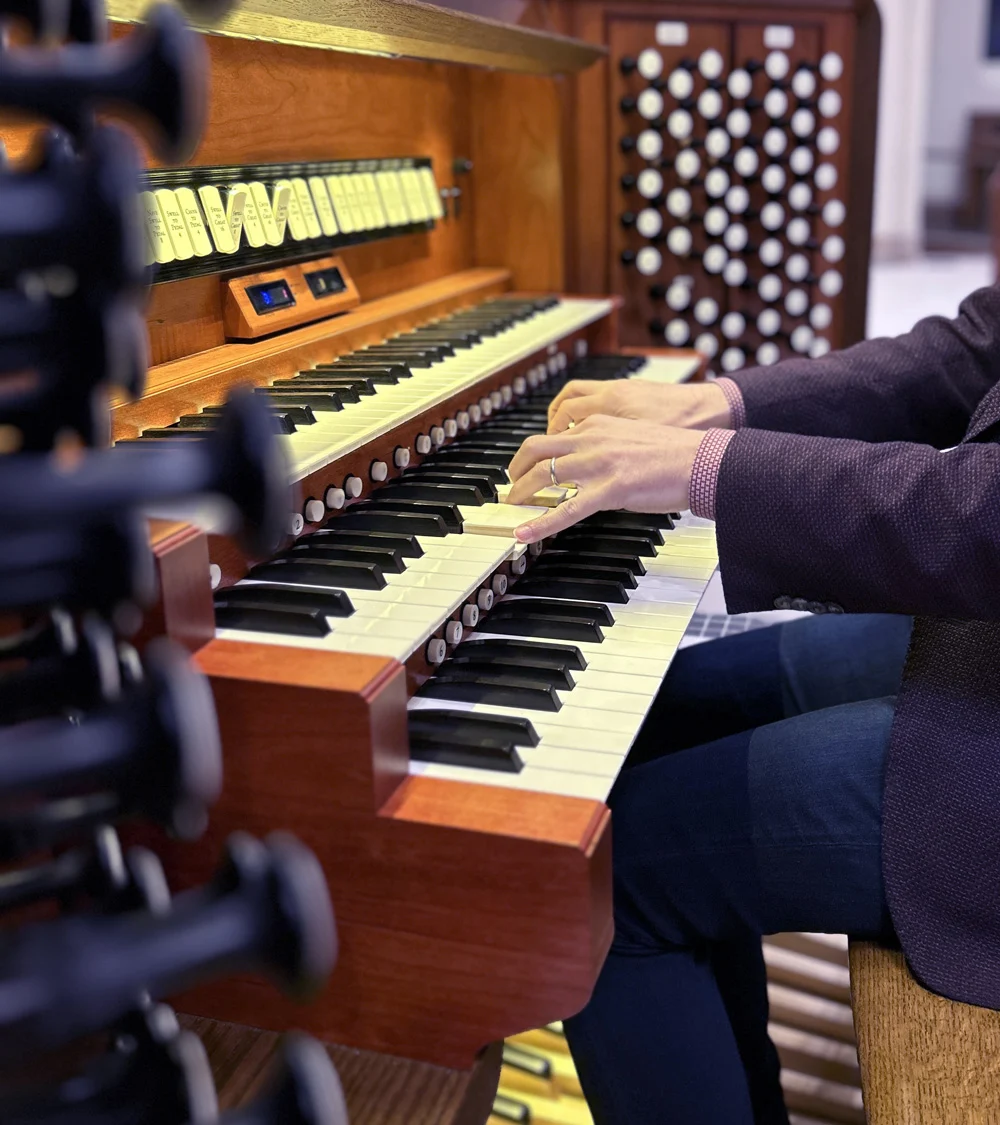
New instruments are dedicated to the glory of God either during a worship service or special event. A special recital is often planned to celebrate the completion of the organ and to demonstrate its tonal capabilities. Parsons typically participates in the event and welcomes the opportunity to help.
Long Term Care
Parsons guarantees workmanship and materials for a period of five years. Annual maintenance is required to ensure reliable performance. If Parsons are unable to provide routine care due to distance outside our normal service area, we will work with you to establish a relationship with a reputable local firm. We leave tools and spare components with every instrument along with a Service notebook highlighting special or unique needs regarding access or tuning.